操作系统
Lec5: CPU Scheduling
CPU 调度的基本概念、各类调度算法(FCFS/SJF/RR/优先级/多级反馈队列),以及多核与实时调度。

CPU Scheduling
.png)
CPU Scheduling 不仅适用于进程调度,也适用于线程的调度。
在系统调用完成并返回用户态时能够进行 CPU 调度。
基本概念
- Maximum CPU utilization obtained with multiprogramming
- CPU–I/O Burst Cycle – Process execution consists of a cycle of CPU execution and I/O wait
- CPU burst distribution
进程在运行的时候,总是会遇到很多 I/O 操作,此时 CPU 会停止运行。为了最大化利用 CPU的资源,我们希望可以利用这些空余时间。
Alternating Sequence of CPU And I/O Bursts
一个程序执行的过程被 I/O 操作分成了很多片段,我们称为 CPU burst 。
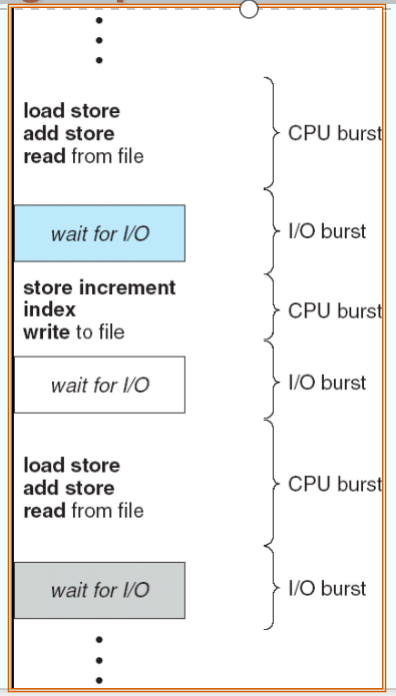
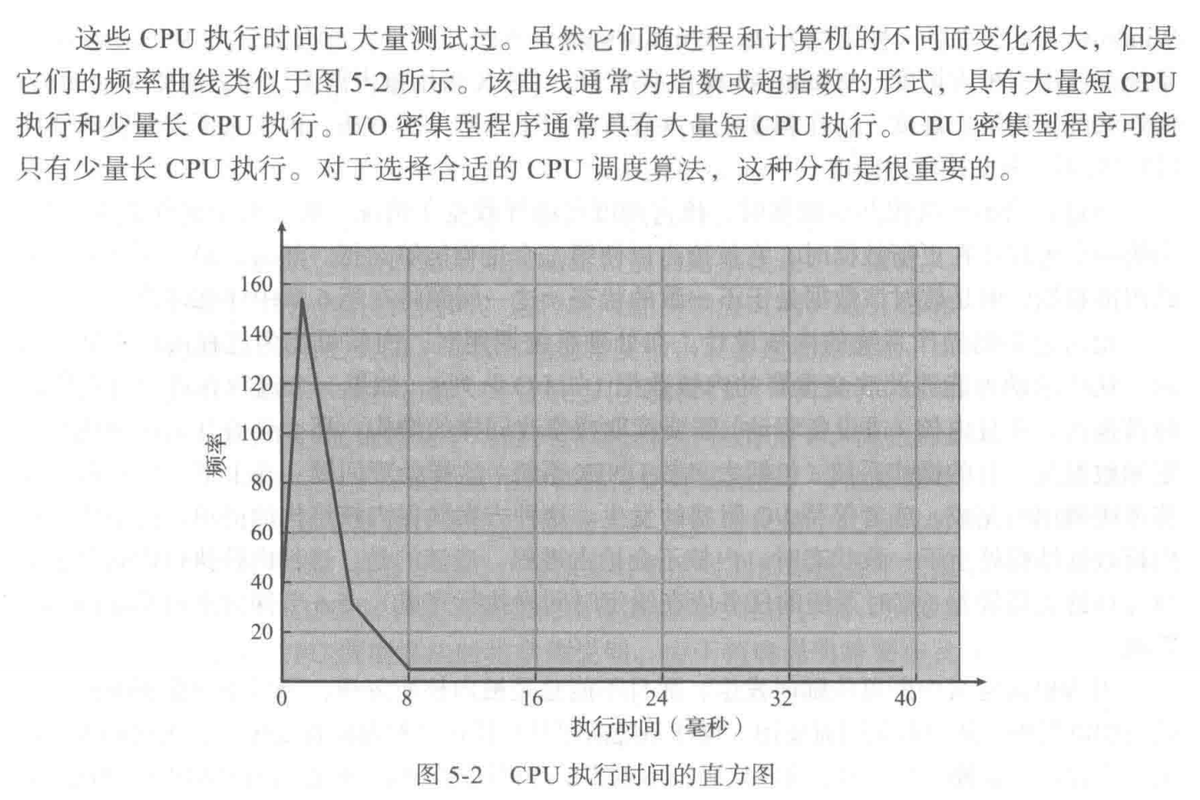
上面的图片告诉我们 scheduler 的选择应该很快,不能使用很长的时间。(short scheduler)
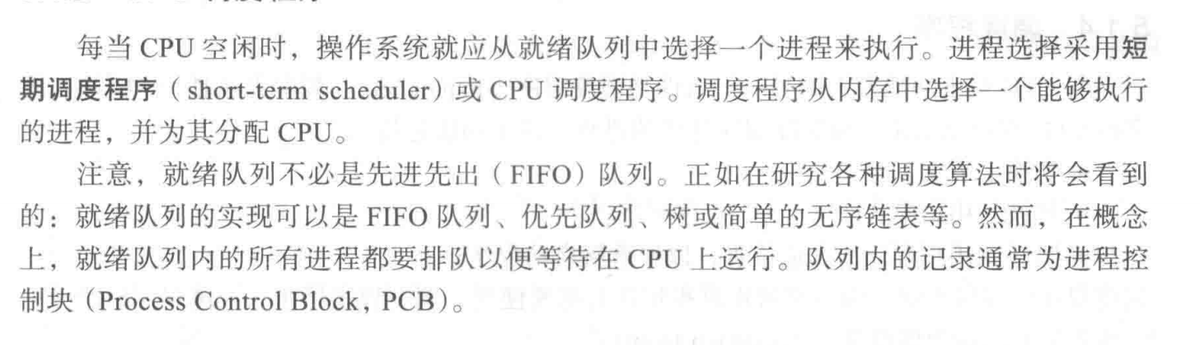
CPU 调度程序
抢占调度
- CPU scheduling decisions may take place when a process:
- When a process switches from the running state to the waiting state (e.g. I/O request or an invocation of wait())
- When a process switches from the running state to the ready state (e.g., when an interrupt occurs)
- When a process switches from the waiting state to the ready state (e.g., at completion of I/O)
- When a process terminates
- Scheduling under 1 and 4 is nonpreemptive All other scheduling is preemptive
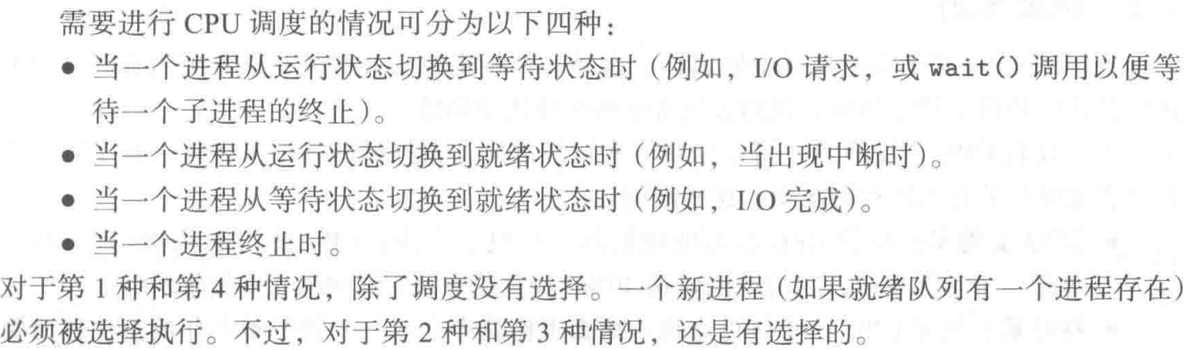
- 若调度只能发生在第1种和第4种情况下,则调度方案称为非抢占的(nonpreeemptive)或者是协作的(cooperative),否则,调度方案称为抢占的(preemptive)。
- 在非抢占调度下,一段某个进程分类到 CPU,该进程就会一直使用 CPU,直到它终止或者是切换到等待状态。
调度程序(Dispatcher)
- Dispatcher module gives control of the CPU to the process selected by the short-term scheduler; this involves:
- 调度程序是一个模块,用来将 CPU 控制交给由短期调度程序选择的进程。这个功能包括:
- switching contexts
- switching to user mode
- jumping to the proper location in the user program to restart that program
- Dispatch latency – time it takes for the dispatcher to stop one process and start another running
下图展示了什么叫做 Dispatch latency。
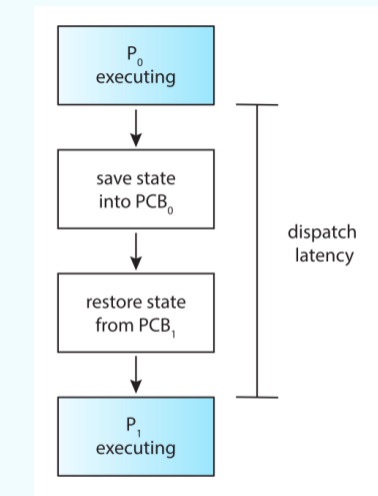
调度程序应该尽可能块,因为每次进程切换的时候都需要使用。
需要注意的是,**Dispatcher(分发器)是在 Scheduler(调度器)做出决定之后才介入的。**以下是甜美两者的区别:
| 模块 | 英文名 | 角色 | 核心问题 | 动作 |
|---|---|---|---|---|
| 短期调度器 | Short-term Scheduler | 决策者 (The Brain) | "下一个该谁运行?" | 浏览就绪队列,根据算法(如 FCFS, 轮转等)选出一个进程。 |
| 分发器 | Dispatcher | 执行者 (The Hands) | "怎么把它放上去?" | 实际上手操作 CPU 寄存器,切换上下文,让选中的进程跑起来。 |
调度准则(Scheduling Criteria)
跟之前的学科一样,想要从众多的调度程序中选择出最好的,我们需要定义一些指标。
- CPU utilization (CPU利用率) – keep the CPU as busy as possible
- 注意是在运行一定任务的时候,我们希望 CPU 的运用率高
- Throughput (吞吐率)– # of processes that complete their execution per time unit
- 一个时间单元内进程完成的数量。
- Turnaround time (周转时间)– amount of time to execute a particular process
- 从进程提交到进程完成的时间段被称为周转时间(turnaround time)
- Waiting time (等待时间)– amount of time a process has been waiting in the ready queue
- 在就绪队列中等待所花费的时间之和。
- Response time (响应时间)– amount of time it takes from when a request was submitted until the first response is produced, not output (for time-sharing environment)
- 提交任务之后第一次响应的时间
调度算法
CPU 调度处理的问题是:从就绪队列中选择进程以便为其分配 CPU。
First-Come, First-Served (FCFS) Scheduling(先到先出服务调度)
采用这种方案,先请求 CPU 的进程首先分配到 CPU。
缺点是平均等待时间(算术平均)很长。例如:
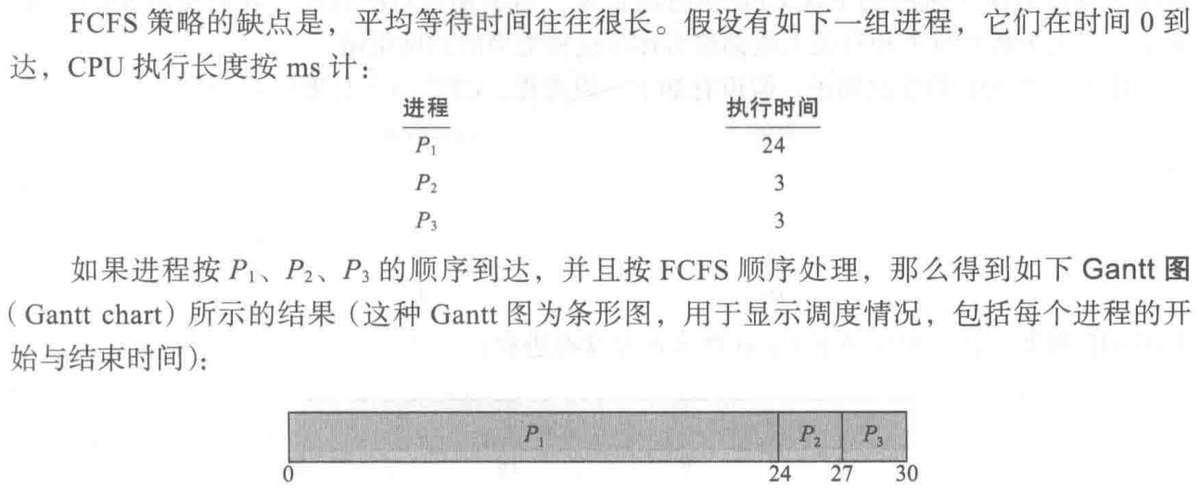
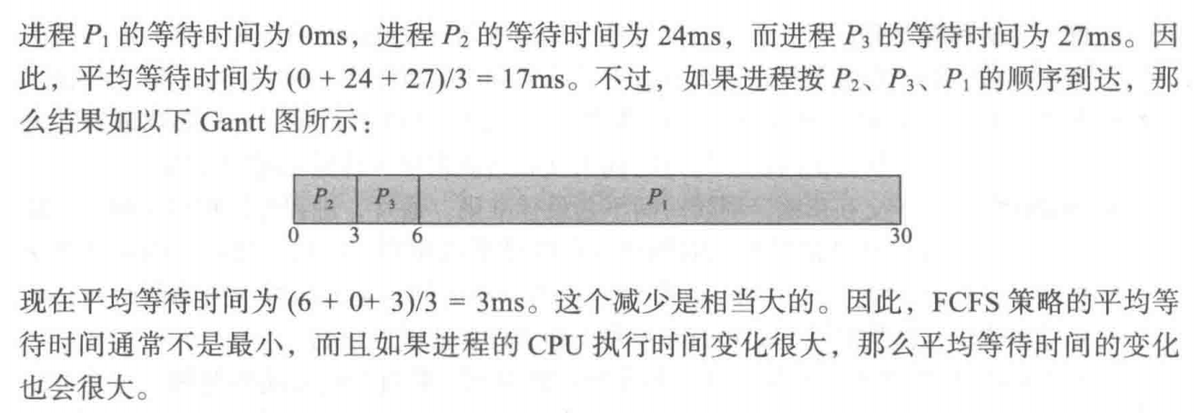
- 这样来算的话,。
-
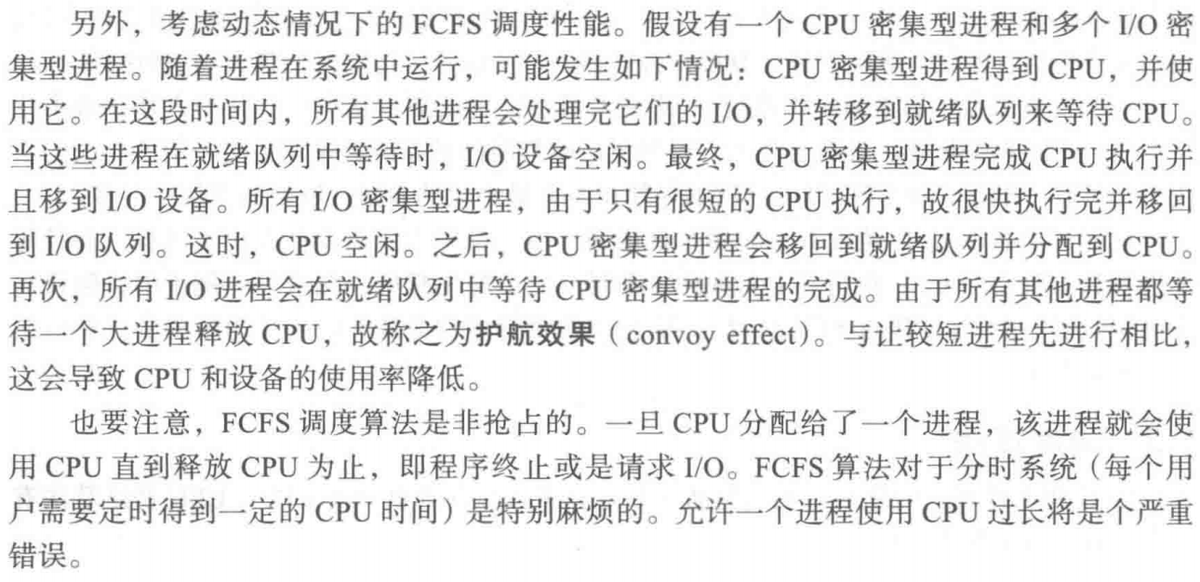
这种方法对长时间作业比较有利,对短时间作业不利;因为 CPU 密集型作业需要占据的 CPU 时间很多,因此属于长时间作业;而 I/O 密集型作业因为要频繁调用 I/O 操作,CPU 使用的少,因此属于短时间作业。
- 长时间一旦占据 CPU 之后,就可以一直使用,因此处理效率很高。
-
长短时间描述的是占据 CPU 的时间。
Shortest-Job-First (SJF) Scheduling(最短作业优先调度)
根据上面的例子我们可以知道把执行时间较短的进程放在前面比较合理。因此,我们可以考虑采用最短作业优先的调度算法。
- Associate with each process the length of its next CPU burst. Use these lengths to schedule the process with the shortest time
- Two schemes:
- 根据是否抢占,我们可以将调度方法分为两种:非抢占式的和抢占式的。
- nonpreemptive – once CPU given to the process it cannot be preempted until completes its CPU burst
- preemptive – if a new process arrives with CPU burst length less than remaining time of current executing process, preempt. This scheme is known as the Shortest-Remaining-Time-First (SRTF)
- SJF is optimal – gives minimum average waiting time for a given set of processes
对于上述的两种类型的调度,我们可以举两个例子:
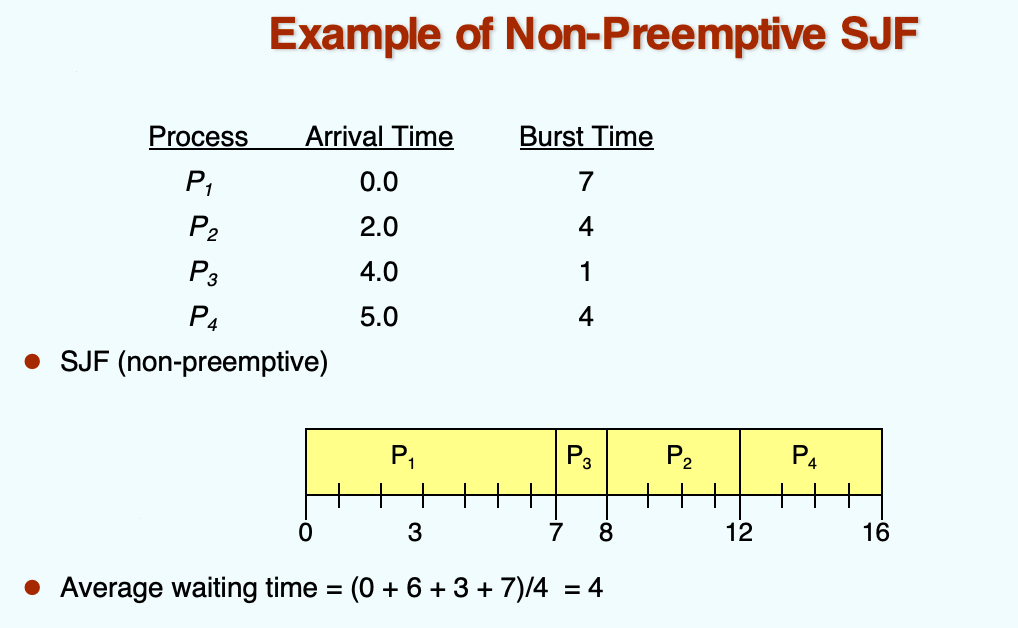
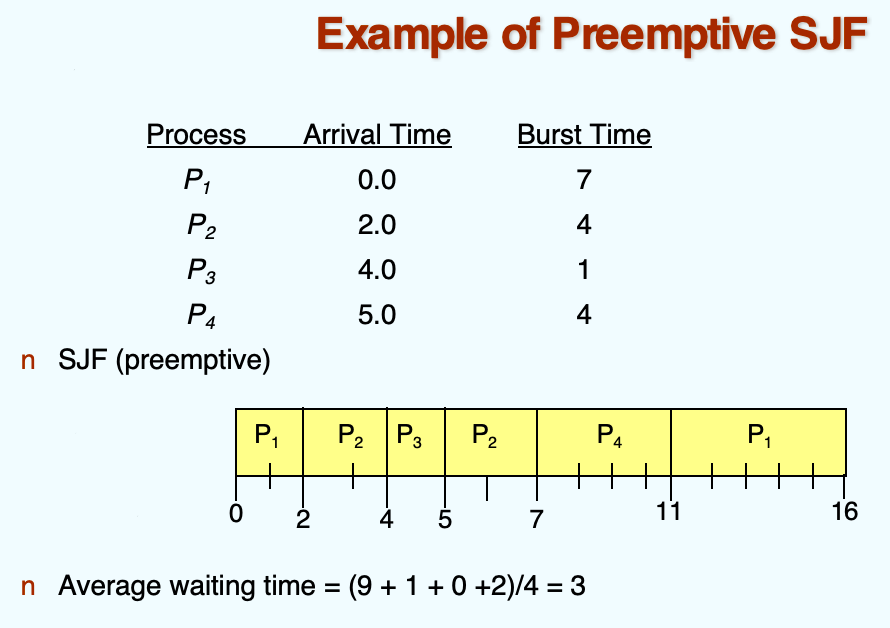
- Unfortunately, no way to know the length of the next burst
- 不幸的是,在实际中,我们是无法知道一个进程的 CPU buest time 的
- Can only estimate the length
- 我们只能进行预测
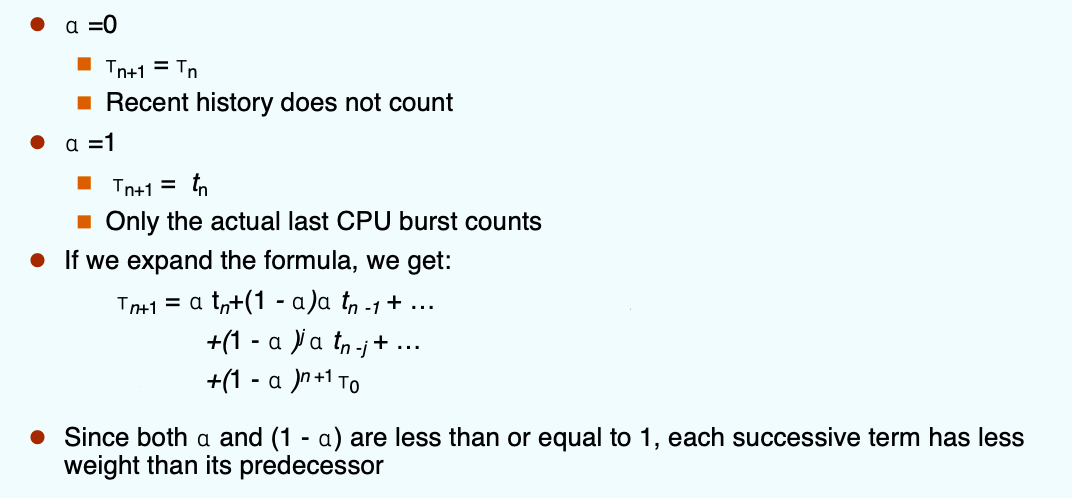
- Can be done by using the length of previous CPU bursts, using exponential averaging(指数平均)
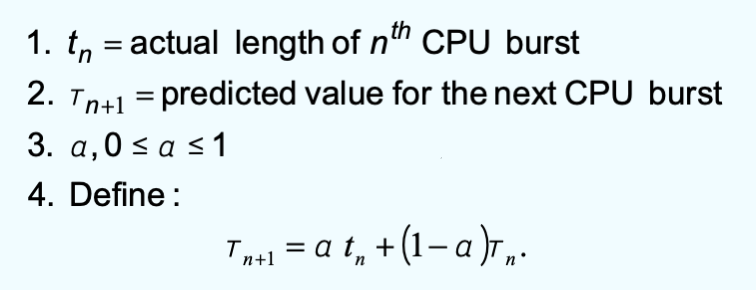
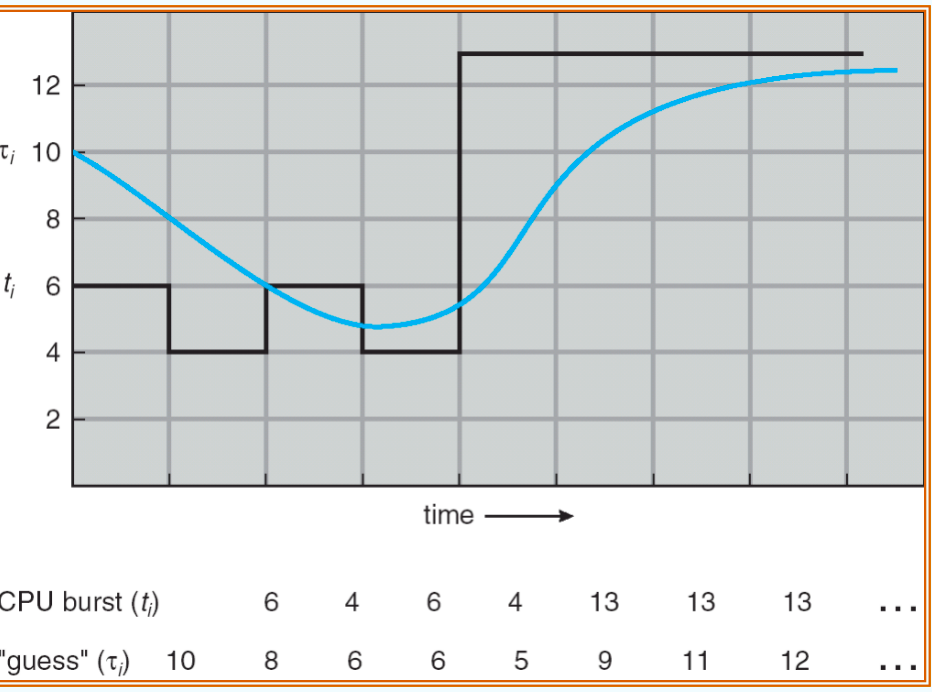
优先调度算法一个最主要的问题就是无穷阻塞(indefinite blocking)或者是饥饿(starvation)。就绪运行但是等待 CPU 的进程可以认为是阻塞的。优先调度算法会让某个低优先级的进程无穷等待 CPU。
解决饥饿的方案之一是老化(aging)。老化逐渐增加在系统中等待很长的进程的优先级。
轮转(Round-Robin)调度
- 时间量(time quantum)/时间片(time slice):一个较小的时间单元。
- 就绪队列作为循环队列,类似于循环列表。
- 过程:
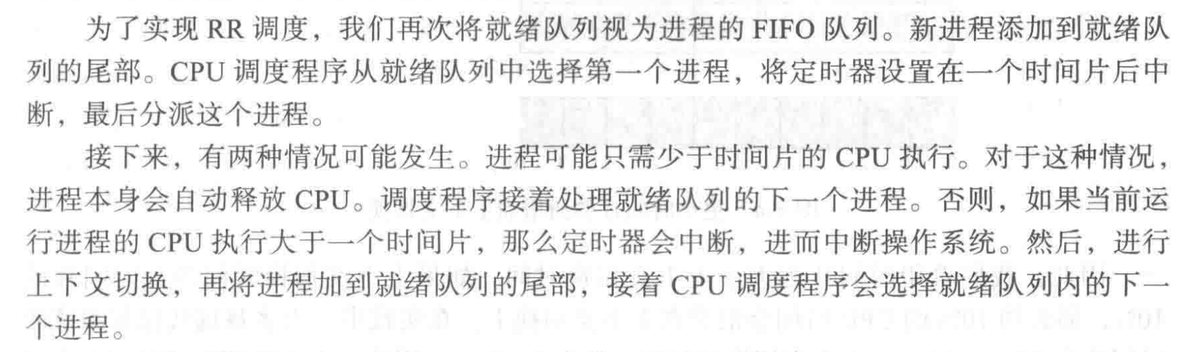
- 时钟中断发生后,系统会修改当前进程在时间片内的剩余时间。
- 时间片结束还没运行完成的,状态变为就绪态,等待下次的系统调用。
- 这种方法的实时性很好,可以很好地和用户交流
多级队列调度(Multilevel Queue)
在进程容易分成不同组的情况下,可以有另外一类调度算法,例如,Ready queue is partitioned into separate queues:
- foreground process(interactive) 前台进程
- background process(batch) 后台进程
这两种类型具有不同的响应时间要求,进而有不同调度需要。进台进程可能有比后台进程更高的优先级。
- Each queue has its own scheduling algorithm, for example
- foreground – RR
- 交互性好
- background – FCFS
- Scheduling must be done between the queues
- Fixed priority scheduling; (i.e., serve all from foreground then from background). Possibility of starvation.
- Time slice – each queue gets a certain amount of CPU time which it can schedule amongst its processes;
- i.e., 80% to foreground in RR
- 20% to background in FCFS
多级反馈队列调度(Multilevel Feedback Queue)
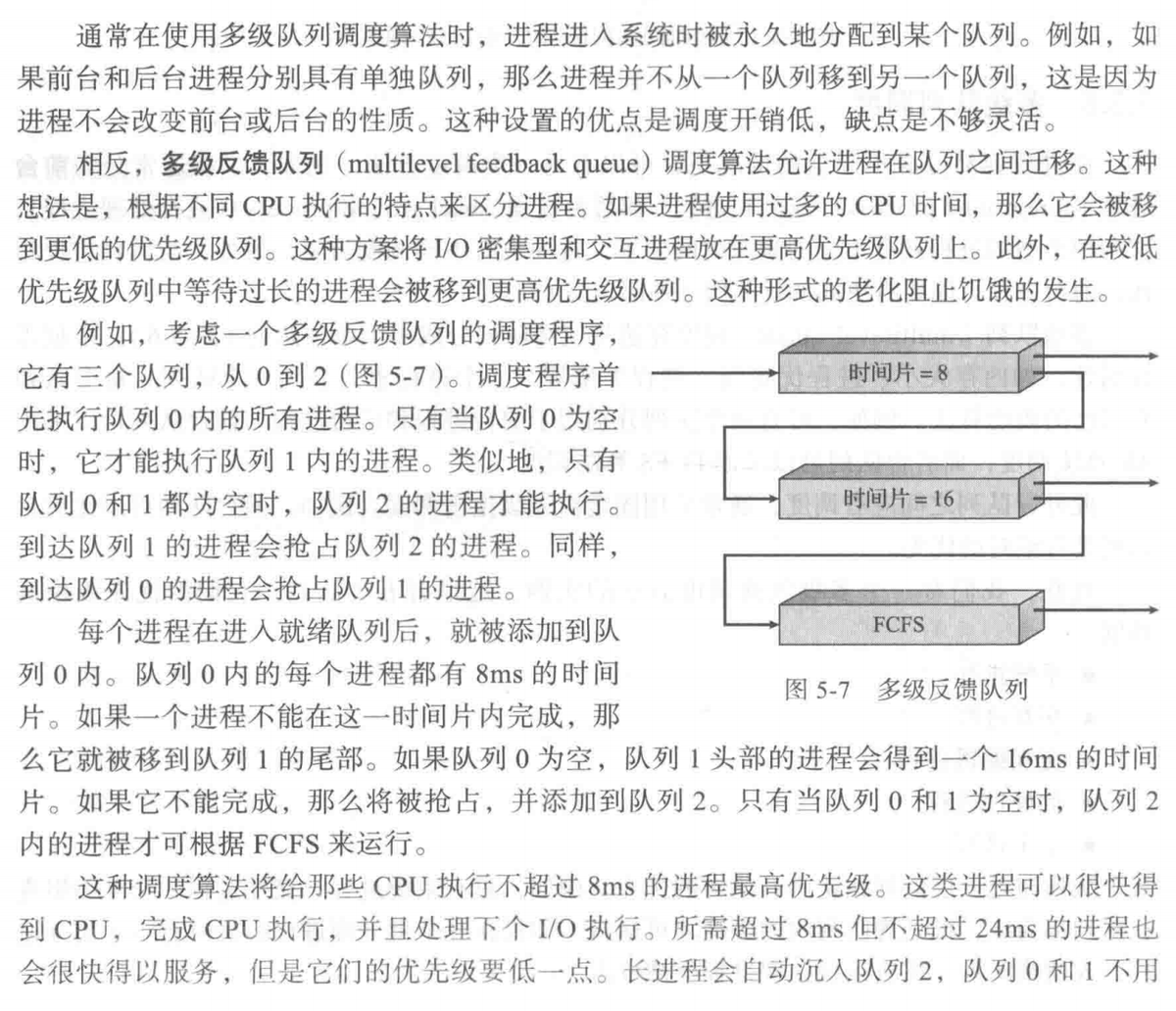
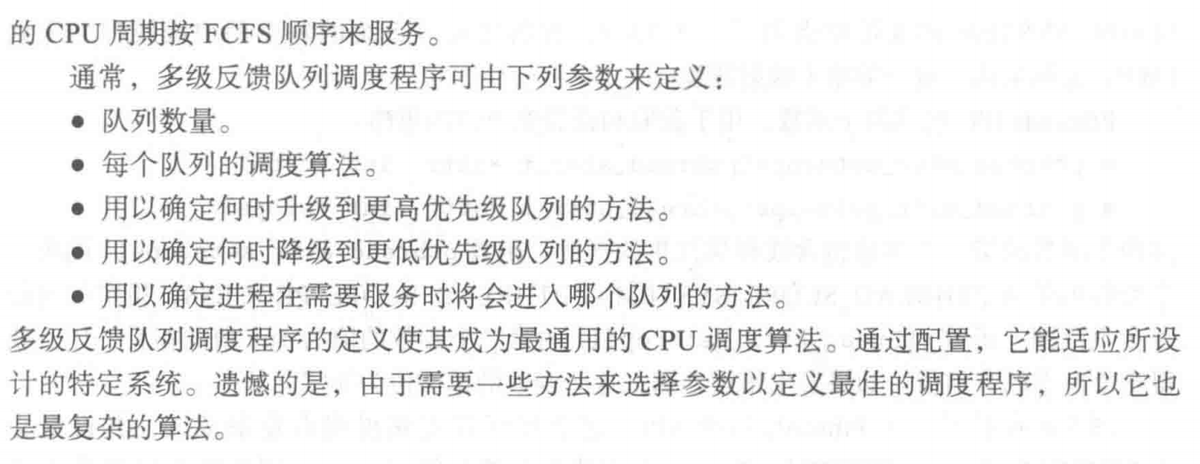
多处理器调度方法(Multiple-Processor Scheduling)
- 需要考虑
- 负载平衡:尽量让每一个 CPU 都同等忙碌
- 处理器亲和性:尽量让同一个进程运行在一个 CPU 上
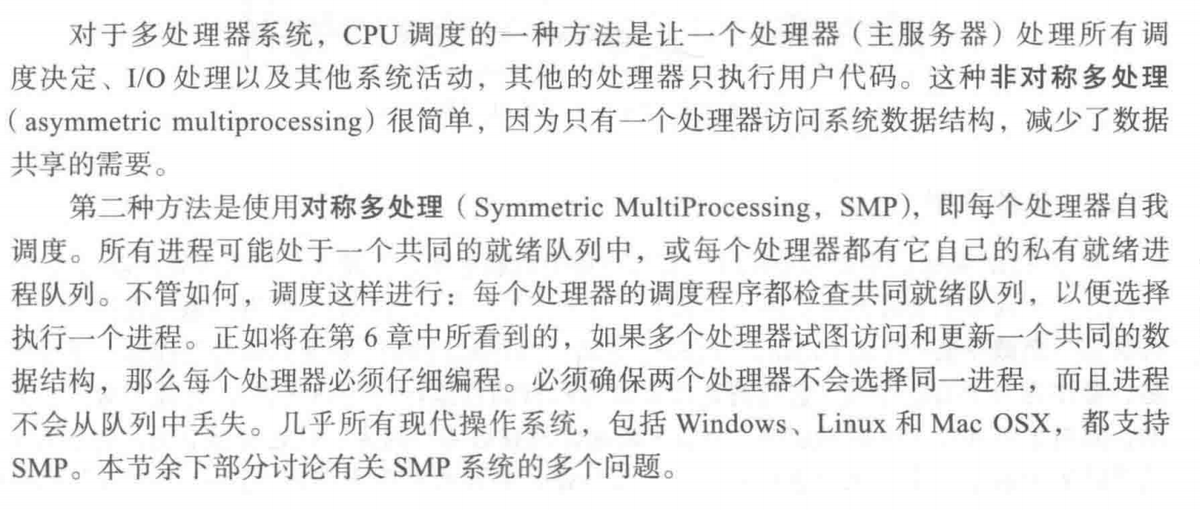
- Asymmetric multiprocessing
- Symmetric MultiProcessing, SMP
实时 CPU 调度

- Hard real-time systems
- Soft real-time computing
- 抢占式优先级高者优先算法比较适合实时系统的进程调度。

Written by
ZZC
每天研究怎么摸鱼的神人
Comments
评论功能即将上线