操作系统
Lec2: Operating-System Structures
操作系统能提供哪些服务、系统调用与 shell 接口、内核结构(单体/分层/微内核/模块化)。

Operating-System Structures
Operation System Services
以下图片展示了操作系统所能提供的服务:
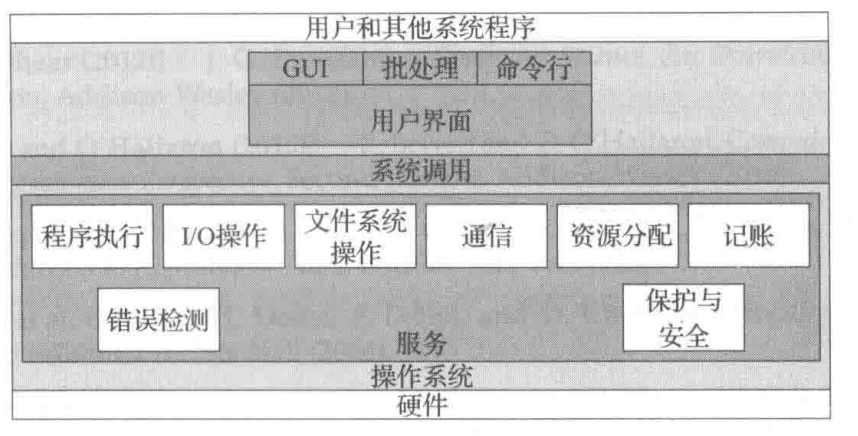
对于用户来说,操作系统可以提供一系列的服务:
- User Interface:基本上所有的操作系统都有用户界面。
- 多种方式:命令行界面(CLI)、批处理界面(Batch Interface)、图形用户界面(GUI)
- Program Execution:系统应能加载程序到内存,并加以运行。程序应能结束执行,包括正常和不正常。
- I/O 操作:为了安全,用户一般不控制 I/O
- File system manipulation:文件操作
- Conmunications:
- (同一/不同)电脑的进程与进程之间交换信息
- 实现:
- Shared memory
- Message Passing
- Error detection:
Another set of OS functions exists for ensuring the efficient operation of the system itself via resource sharing
- Resource allocation:
- Accounting:
- 需要记录用户所用资源类型以及数量
- Protection and security:
System calls
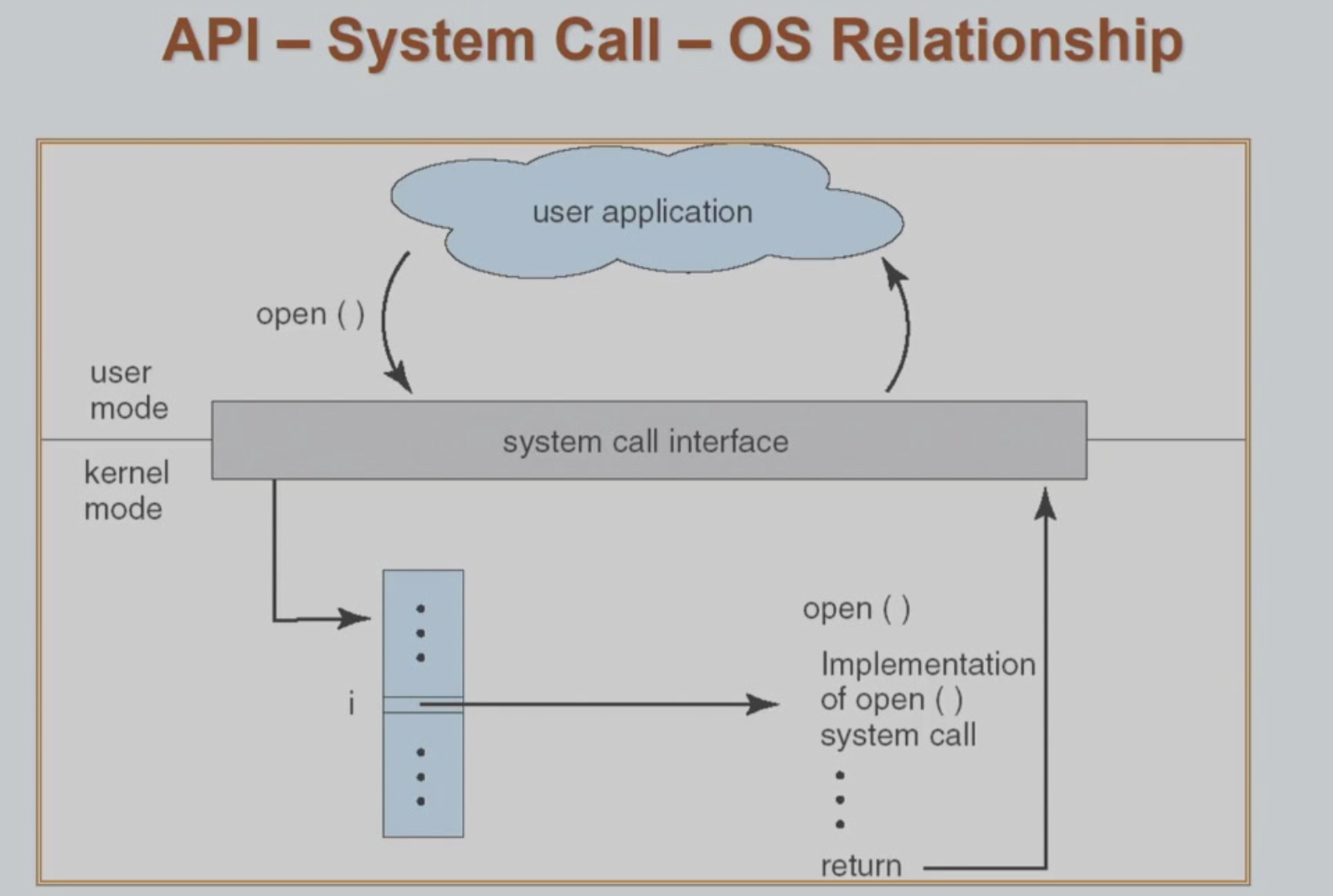
- 相对于繁琐的系统调用,程序员们更喜欢使用 API。而对于绝大多数程序设计语言来说,运行时支持系统提供了系统调用接口(System-call Interface)。
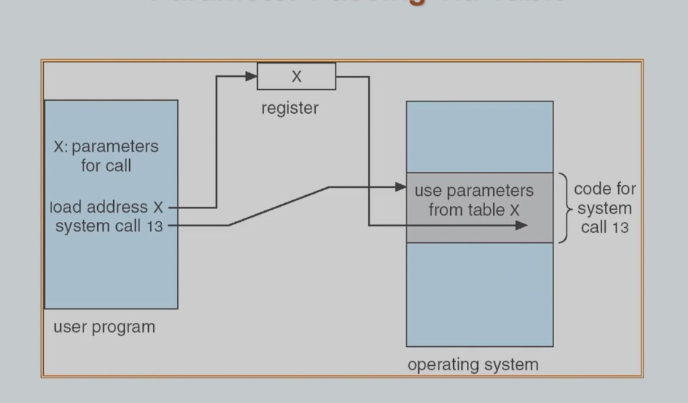
- 在调用的时候,我们有一个参数,叫做 System-call number,我们使用这个参数确定我们要使用哪个 System-call。
- 有两种传参的方式,一种是使用 register;另一种针对参数较多的情况,在 System-call 之前在内存中开辟一段空间,将参数放入这个空间中。
- 我们知道,对于 user mode 和 kenel mode 来说,它们对 memory 的视角是非常不一样的。
-
- 我们知道,对于 user mode 和 kenel mode 来说,它们对 memory 的视角是非常不一样的。
- 有两种传参的方式,一种是使用 register;另一种针对参数较多的情况,在 System-call 之前在内存中开辟一段空间,将参数放入这个空间中。
System Programs
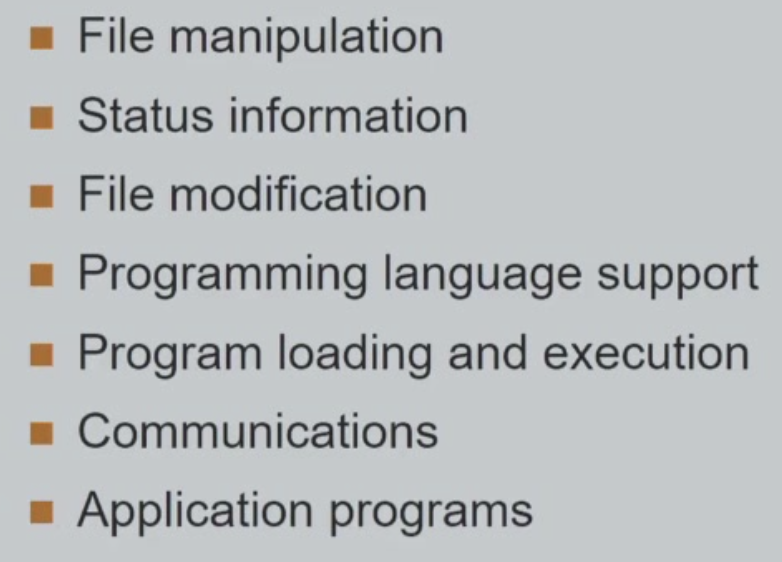
让我们回顾一下计算机的逻辑层次:硬件-->操作系统-->系统程序-->应用程序。系统程序(System Program)也被称为系统工具(System Utility),为程序开发和执行提供了一个方便的环境。有些系统程序只是系统调用的简单用户接口,而其他的可能相当复杂。
系统程序可分为以下几类:
OS design and implementation
Two goals
- User goals – operating system should be convenient to use, easy to learn, reliable, safe, and fast
- System goals – operating system should be easy to design, implement, and maintain, as well as flexible, reliable, error-free, and efficient
Policy and Mechanism
- Policy: What will be done? 策略(确定具体做什么事)
- 它是在拥有机制的基础上,
- 决定如何使用这些工具的具体规则或决策
- Mechanism: How to do it? 机制(定义做事方式)
- 机制通常是比较固定且通用的。
- 它不关心具体的业务逻辑,只负责提供“能力”
- 策略应该是灵活且易变的。
- 不同的环境下,我们可以制定不同的策略,
- 而不需要更换底层的机制
OS Structure
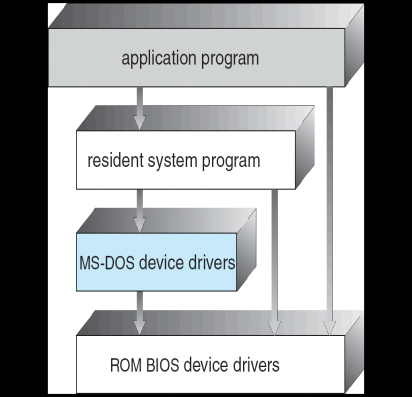
Simple Structure(MS-DOS)
- MS-DOS – written to provide the most functionality in the least space
- Not divided into modules
- Although MS-DOS has some structure, its interfaces and levels of functionality are not well separated
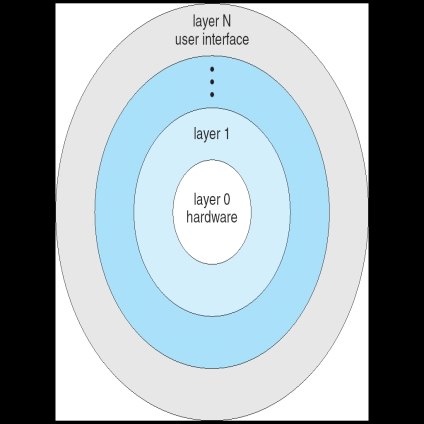
Layered Approach
- The operating system is divided into a number of layers (levels), each built on top of lower layers. The bottom layer (layer 0), is the hardware; the highest (layer N) is the user interface.
- With modularity, layers are selected such that each uses functions (operations) and services of only lower-level layers
一个经典的案例就是 Unix,其结构如下:
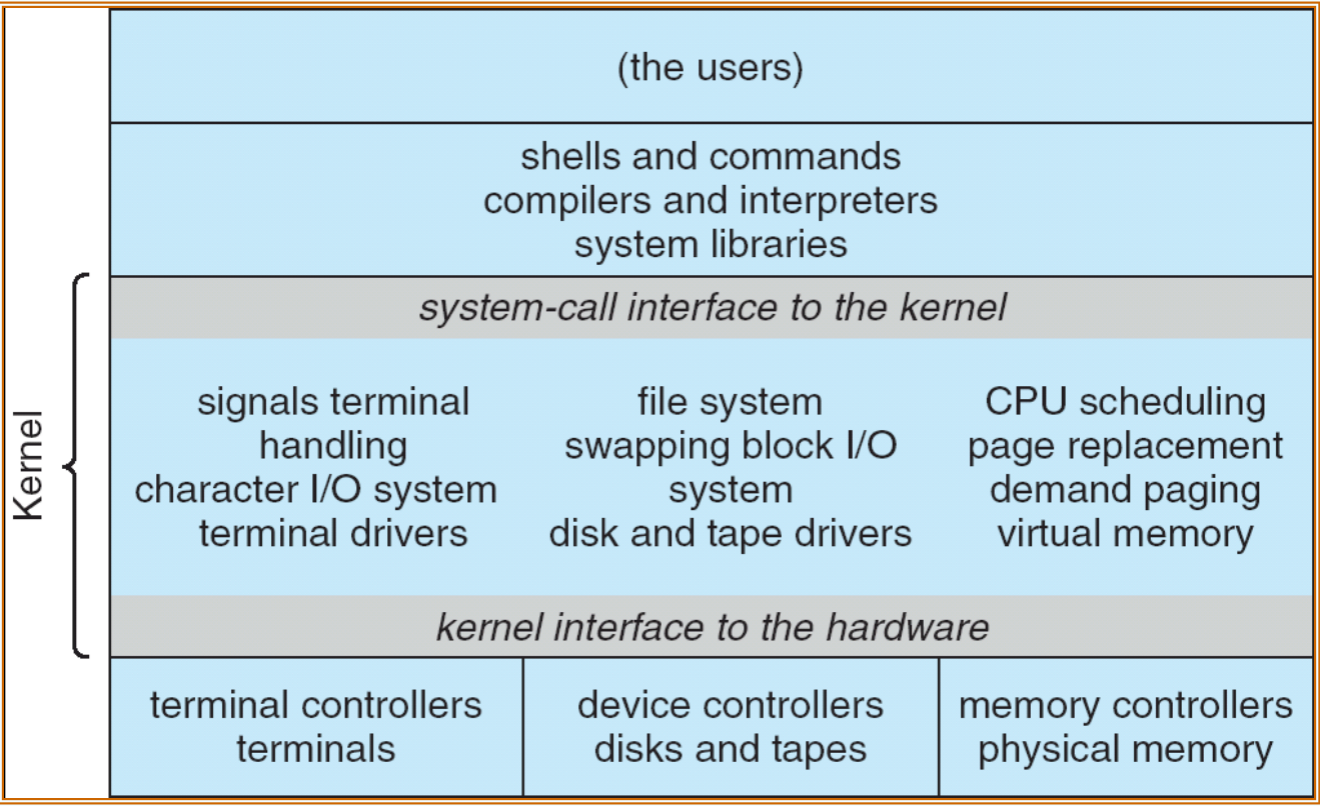
Unix 操作系统包含了两个部分:
- System programs
- The kernel
- Consists of everything below the system-call interface and above the physical hardware
- Provides the file system, CPU scheduling, memory management, and other operating-system functions; a large number of functions for one level
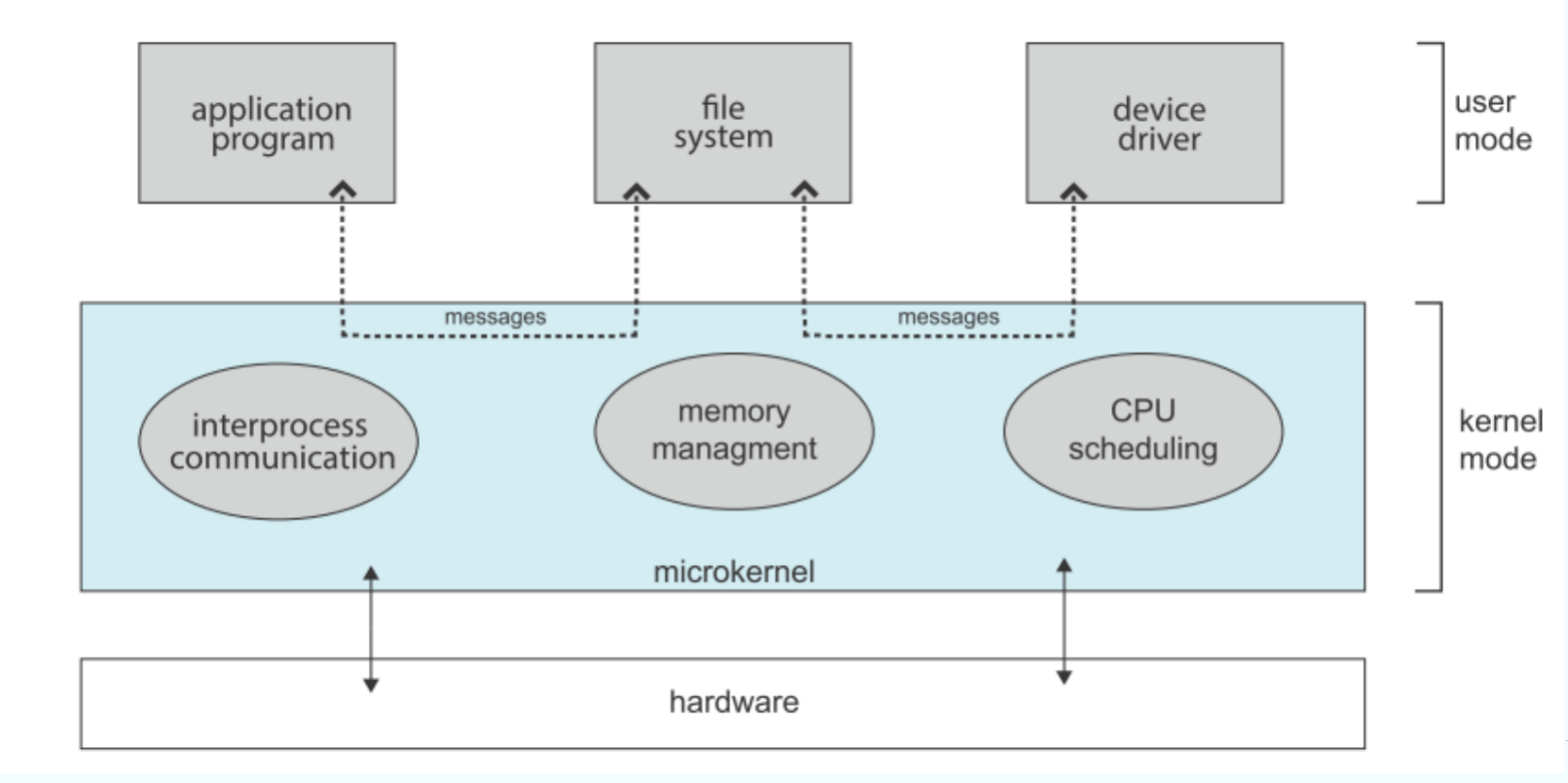
Microkernel System Structure
上面我们看到的都是巨核(Monolithic)操作系统,意思是它们的 Kernel 层都很大。Microkernel System Structure 做出了一系列更新:
- Moves as much from the kernel into “user” space
- Communication takes place between user modules using message passing
- Benefits:
- Easier to extend a microkernel
- Easier to port the operating system to new architectures
- More reliable (less code is running in kernel mode)
- More secure
- Detriments:
- Performance overhead of user space to kernel space communication
以下是一个示例:
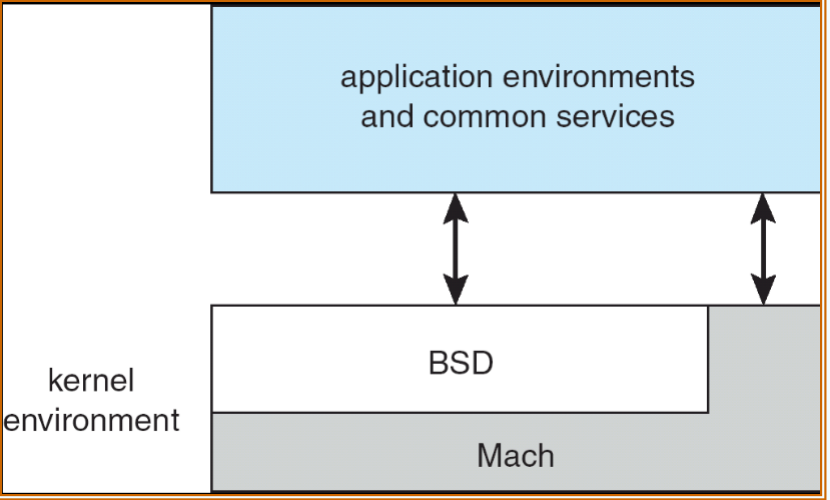
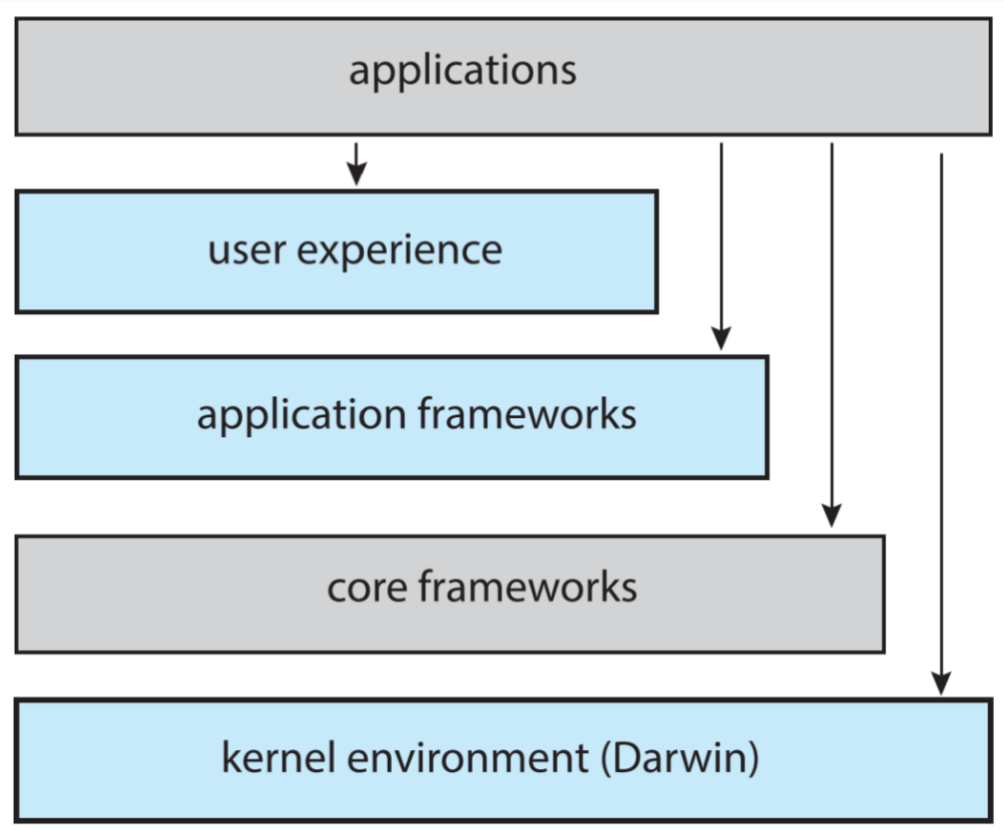
一个现实中的例子就是 Mac OS X 的结构:
Modules
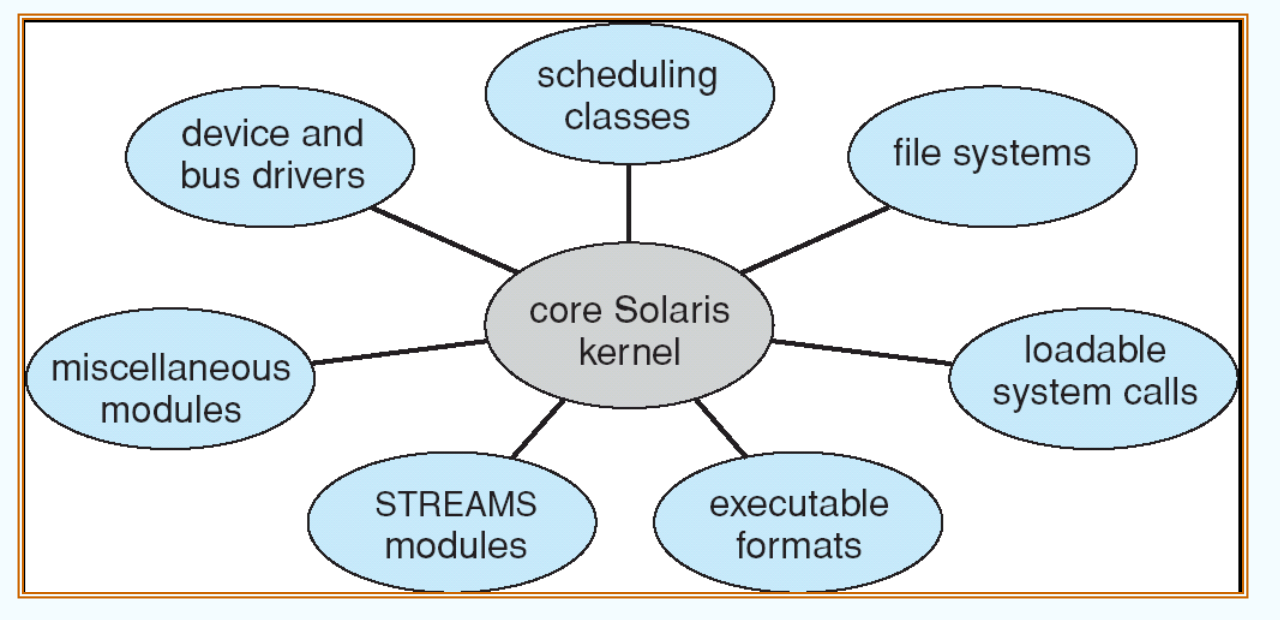
- Most modern operating systems implement kernel modules
- Uses object-oriented approach
- Each core component is separate
- Each talks to the others over known interfaces
- Modules call each other instead of message passing
- Each is loadable as needed within the kernel
- Overall, similar to layers but more flexible
Other Structure
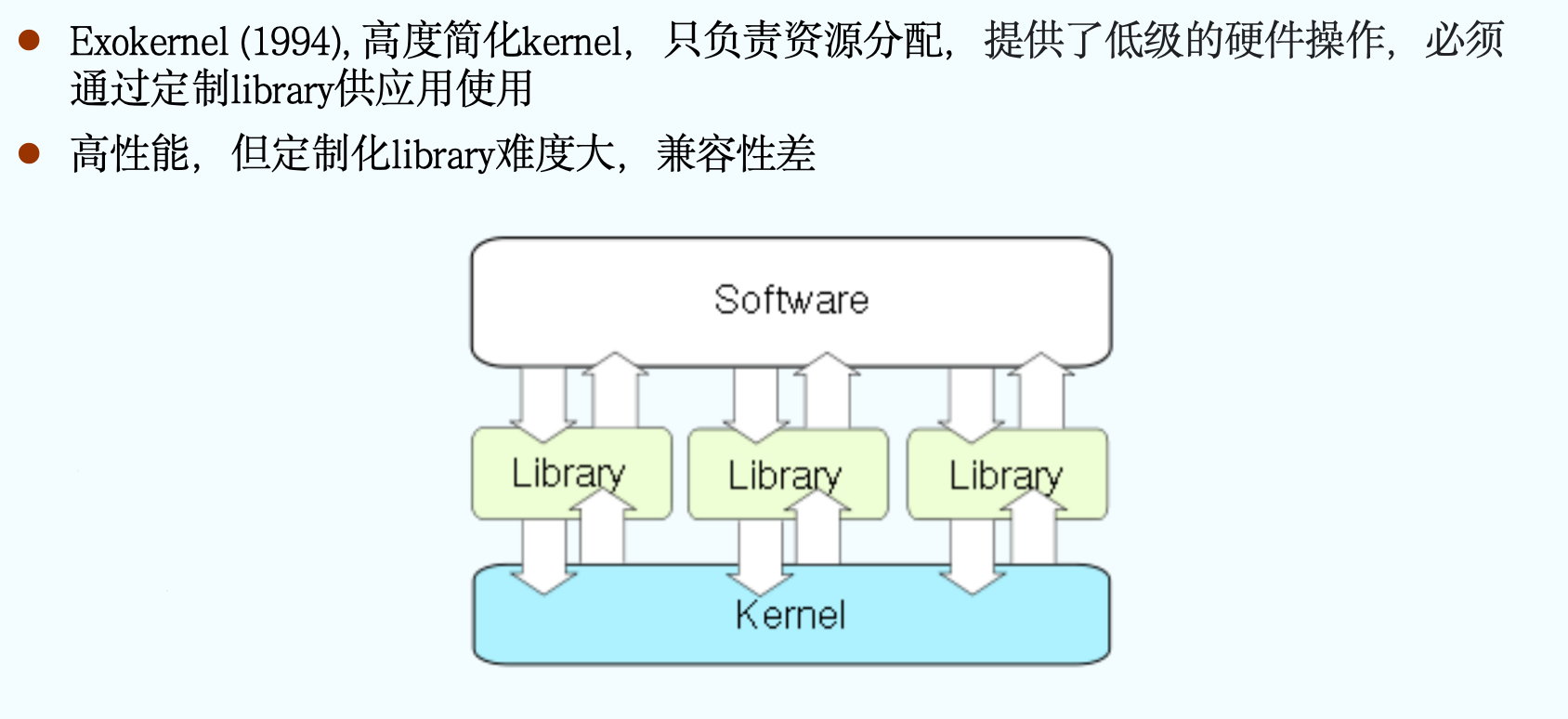
Exokernel
Virtual Machine
-
A virtual machine takes the layered approach to its logical conclusion. It treats hardware and the operating system kernel as though they were all hardware
-
A virtual machine provides an interface identical to the underlying bare hardware
-
The operating system creates the illusion of multiple processes, each executing on its own processor with its own (virtual) memory
-
The resources of the physical computer are shared to create the virtual machines
- CPU scheduling can create the appearance that users have their own processor
- Spooling and a file system can provide virtual card readers and virtual line printers
- A normal user time-sharing terminal serves as the virtual machine operator’s console
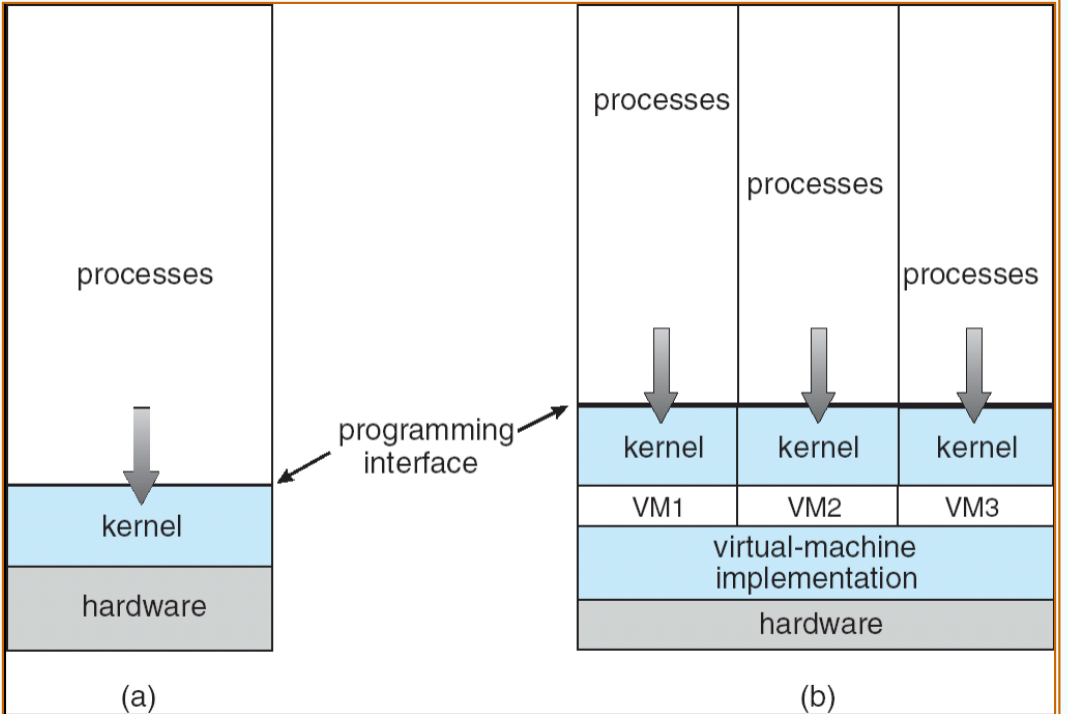
- The virtual-machine concept provides complete protection of system resources since each virtual machine is isolated from all other virtual machines. This isolation, however, permits no direct sharing of resources.
- 每台虚拟机与其他虚拟机都是相互隔离独立的
- A virtual-machine system is a perfect vehicle for operating-systems research and development. System development is done on the virtual machine, instead of on a physical machine and so does not disrupt normal system operation.
- 虚拟机对开发操作系统很友好
- The virtual machine concept is difficult to implement due to the effort required to provide an exact duplicate to the underlying machine. (for example, virtual user mode and kernel mode) *
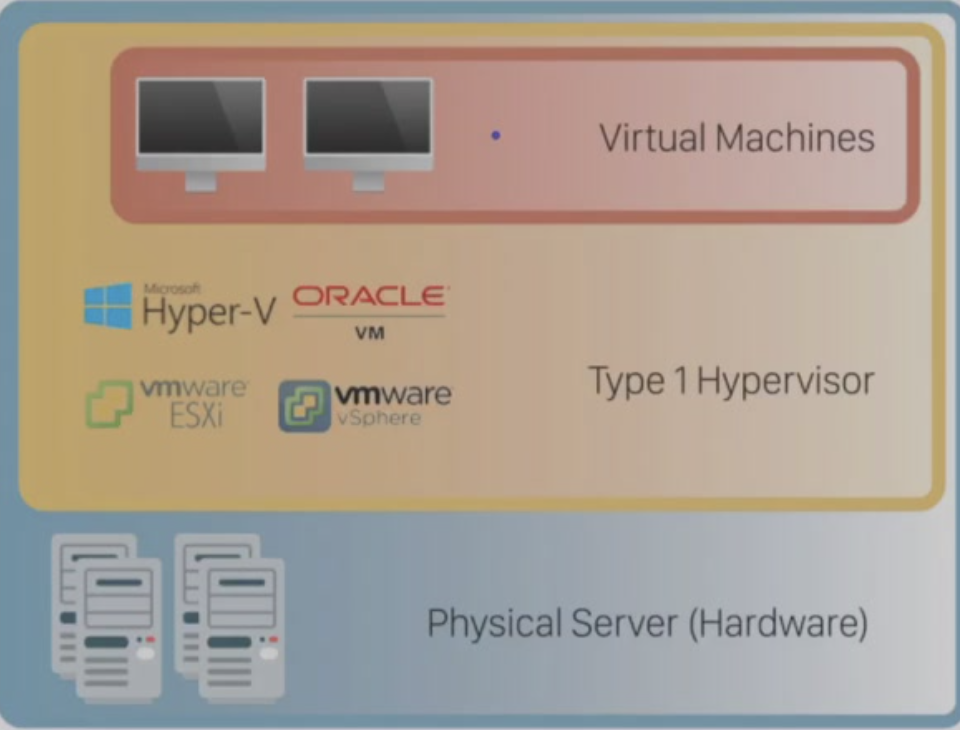
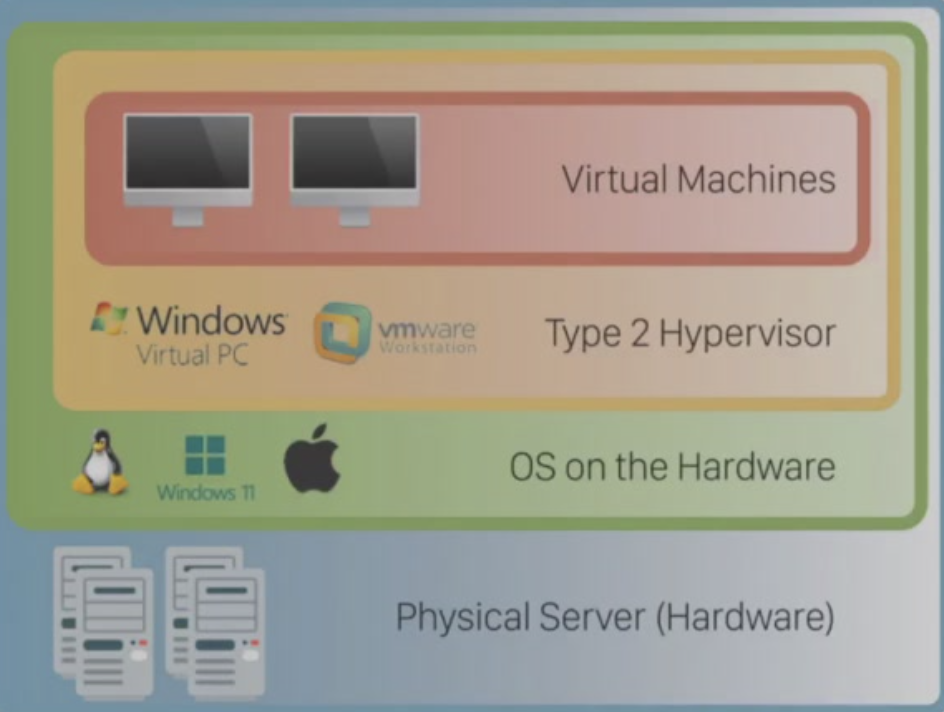
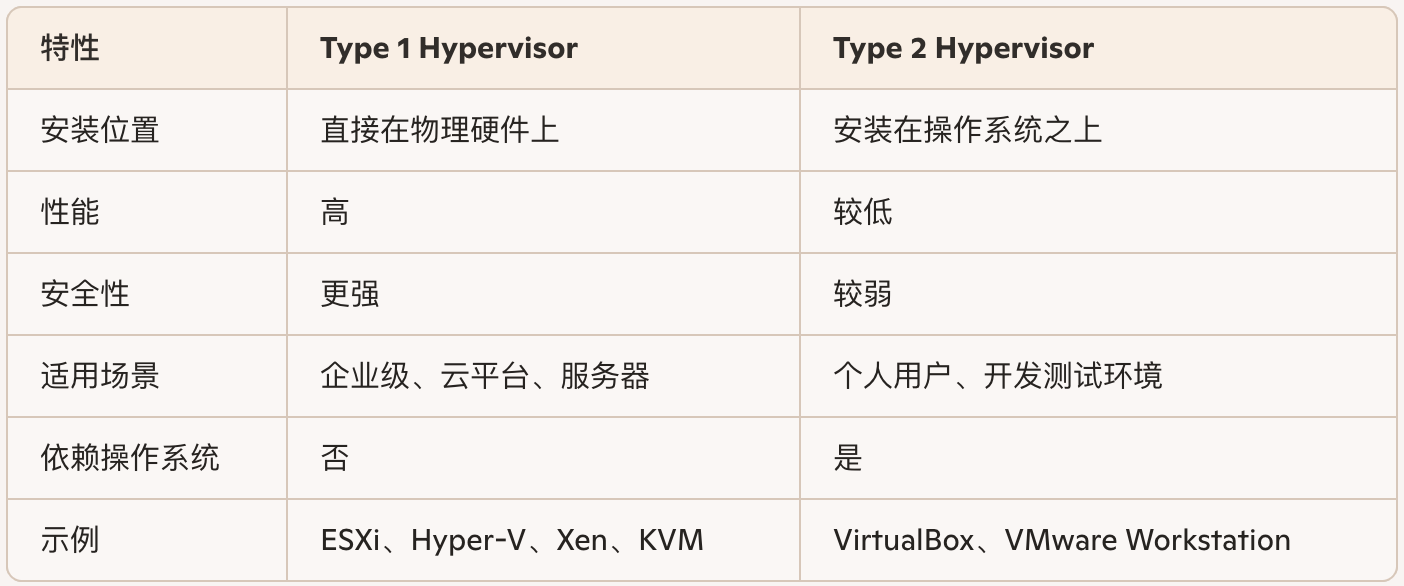
VMM/Hypervisor 有两种:
-
Type 1 Hypervisor:Bare-Metal Hypervisor
-
-
Type 2 Hypervisor:
-
-
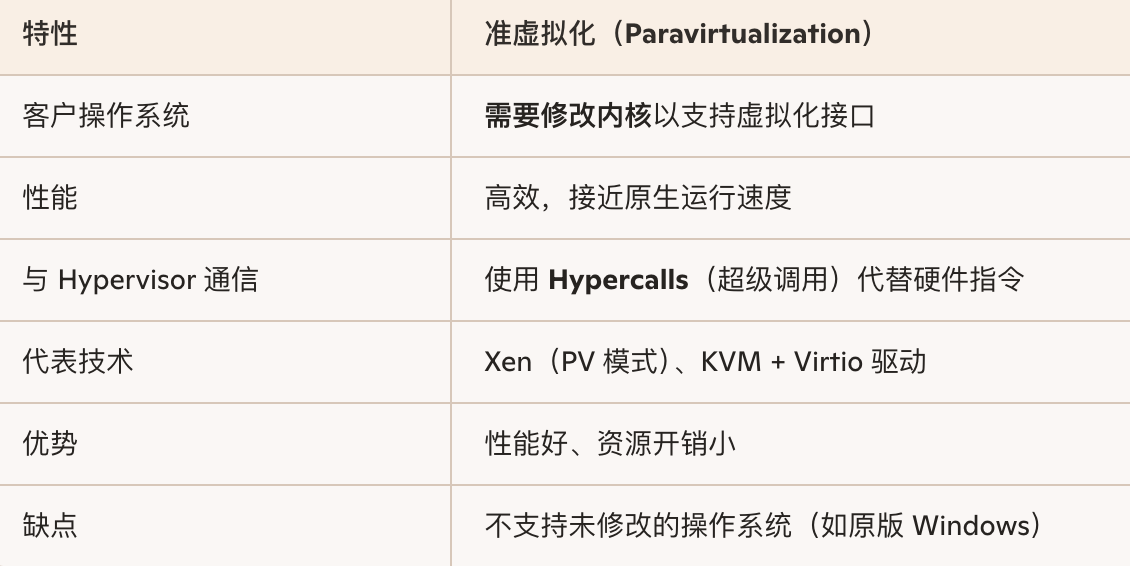
Paravirtualization:
-
Operating System Generation
在刚开机的时候,我们需要从磁盘中调用操作系统,生成操作系统。
- Operating systems are designed to run on any of a class of machines; the system must be configured for each specific computer site
- SYSGEN program obtains information concerning the specific configuration of the hardware system
- Booting – starting a computer by loading the kernel
- Bootstrap program – code stored in ROM that is able to locate the kernel, load it into memory, and start its execution
例子有 lab1 中的 OpenSBI。
System Boot
- Operating system must be made available to hardware so hardware can start it
- Small piece of code – bootstrap program (a.k.a. bootstrap loader), locates the kernel, loads it into memory, and starts it
- Sometimes two-step process where boot block at fixed location loads bootstrap loader
- When power initialized on system, execution starts at a fixed memory location
- Firmware used to hold initial boot code,and test basic hardware components
- Boot loader:找到 Kernel 并加载到内存中,以此来启动操作系统
例如:OpenSBI 放在 0x80000000,用于启动 kernel。

Written by
ZZC
每天研究怎么摸鱼的神人
Comments
评论功能即将上线