编译原理
Lec2: Lexical Analysis
编译原理课程的第二章,介绍了词法分析的基本概念、正则表达式以及有限自动机。词法分析器将源代码转换为 token 流,使用正则表达式描述 token 模式,并通过 NFA 和 DFA 实现。课程还介绍了 Lex 工具,用于自动生成词法分析器,以及 DFA 最小化算法,优化状态数量。

Compiling Process
编译器分为前端和后端:
- 前端(Analysis)
- Lexical Analysis: breaking the input into individual words or "tokens";
- Syntax Analysis: parsing the phrase structure of the program;
- Semantic Analysis: calculating the program's meaning.
- 后端(Synthesis)
| 阶段 | 内容 |
|---|---|
| 前端 | 源代码 → IR |
| 后端 | IR → 汇编/机器码 |
Task of lexical analyzer

- 输入:字符流(stream of characters)
- 输出:token 流(stream of tokens)
例如:
float match0(char *s) 会被转换为:
FLOAT ID(match0) LPAREN CHAR STAR ID(s) RPAREN ...Lexical Token
- token:
- 是字符的一个序列
- 是语法中的一个基本单位
- 有有限种 token 类型
常见 token 类型:
| 类型 | 示例 |
|---|---|
| ID | foo, n14 |
| NUM | 73, 082 |
| REAL | 1.2, 5.5e-10 |
| IF | if |
| COMMA | , |
| NOTEQ | != |
| LPAREN | ( |
- Reserved words: 不会用于 identifiers。例如:IF, VOID, RETURN
非 token 例子:
| 类型 | 示例 |
|---|---|
| comment | /* try again */ |
| preprocessor directive | #include<stdio.h> |
| preprocessor directive | #define NUMS 5, 6 |
| macro | NUMS |
| blanks, tabs, and new-lines |
- The preprocessor deletes the non-tokens
- Operates on the source character stream
- Producing another character stream to the lexical analyzer
- 预处理器先处理字符流,再交给词法分析器。
How to implement a lexical analyzer
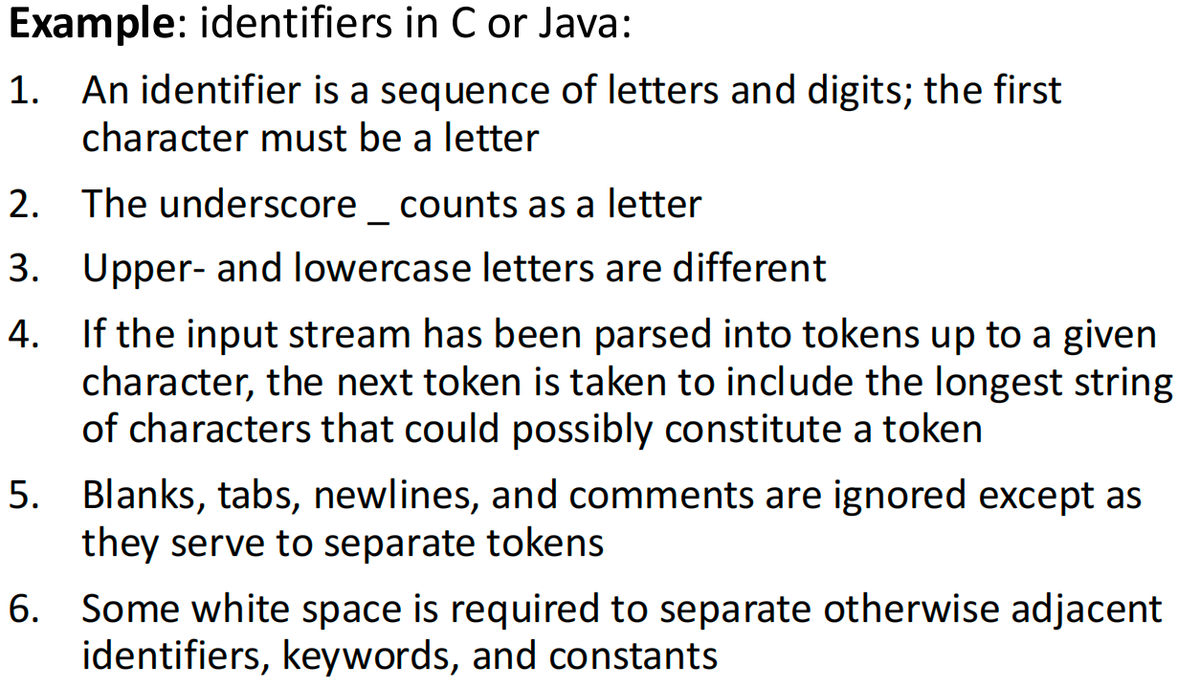
词法规则(英文描述示例)
Implementation
- 四种方法:
- An ad hoc lexer: 手写 lexer
- Regular expressions: 描述 lexer
- Deterministic finite automata: 实现 lexer
- Mathematics: 结合 RE 和 DFA
Regular Expression
- A language is a set of strings
- A string is a finite sequence of symbols
- A symbol is taken from a finite alphabet
基础元素
| 形式 | 含义 |
|---|---|
| a | 字符 a |
| ε | 空串 |
运算
- ,Kleene closure
常见符号:
| 表达式 | 含义 |
|---|---|
| M+ | M 至少一次 |
| M? | 0或1次 |
| [abc] | a | b | c |
| [a-z] | 字符范围 |
| . | 任意字符 |
| "abc" | 字符串字面量 |
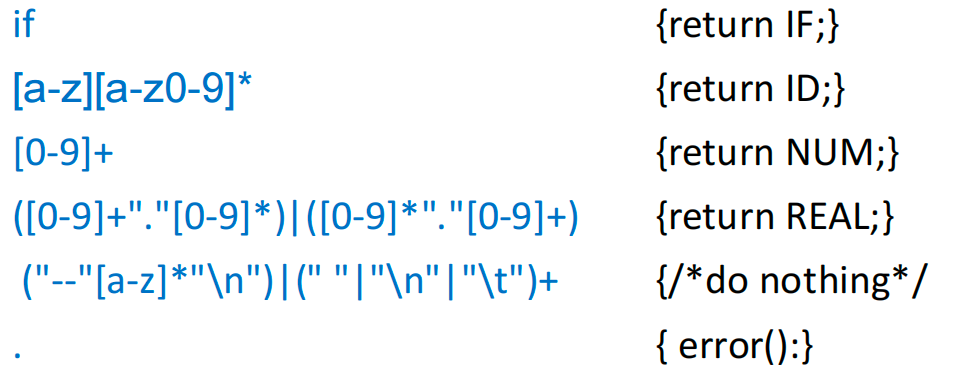
Regular Expressions for Tokens
Disambiguation rules
有时规则匹配会有歧义冲突,有两种方式解决:
- Longest Match(最长匹配):
- 匹配最长可能字符串。
if8匹配为 ID 而不是 IF + NUM
- Rule Priority(规则优先级):
- 若长度相同,优先匹配先写的规则
if匹配为 IF 而不是 ID
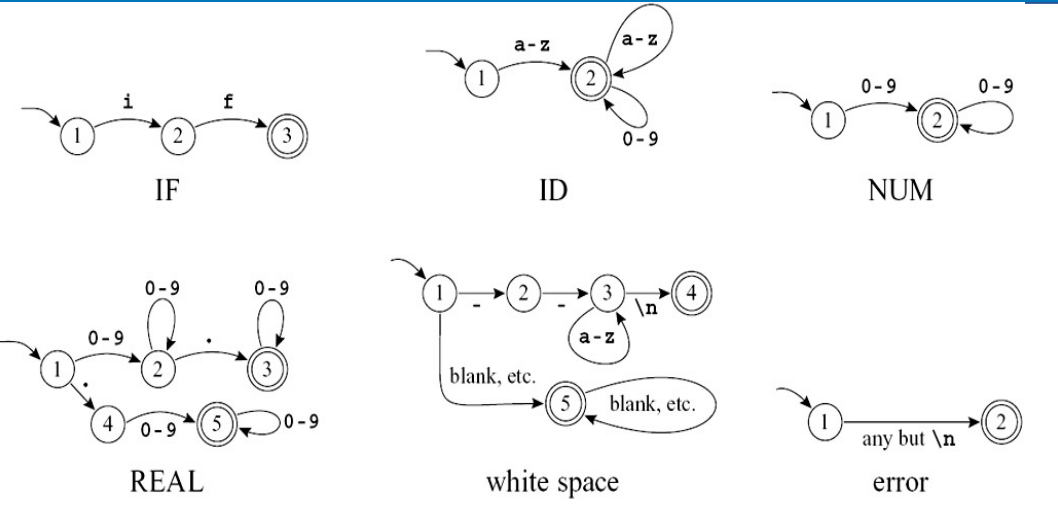
Finite Automata
- DFA 包含:
- 有限状态集合
- 唯一开始状态
- 若干终止状态
- 每个状态对每个字符只有一个转移
- 接受规则
- 从开始状态出发
- 逐字符转移
- 最终落在终止状态 → 接受
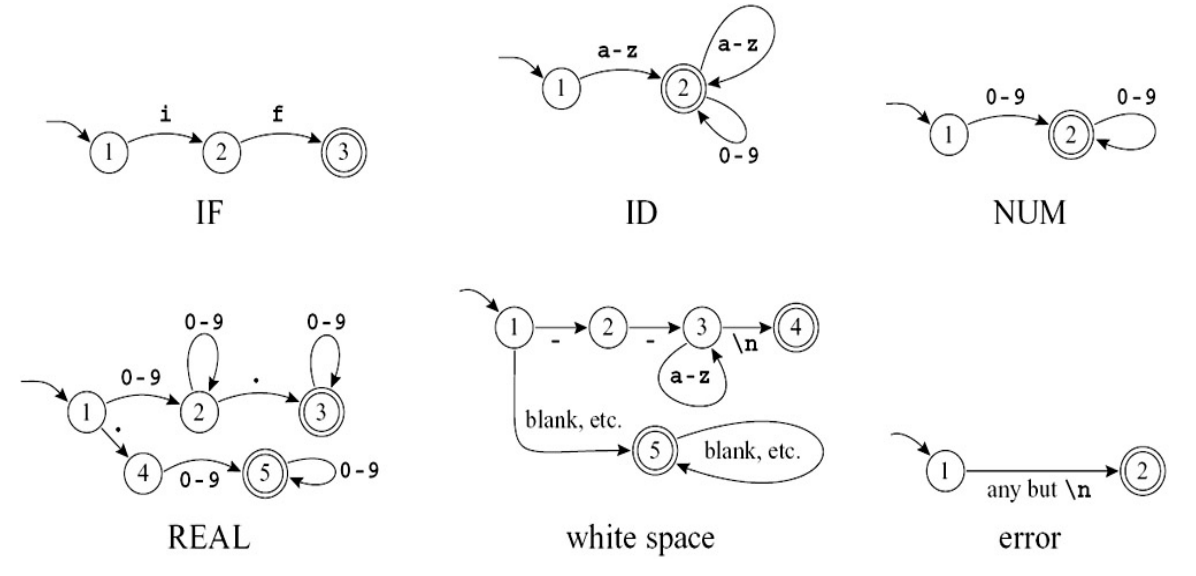
多个 DFA 合并
- 多个 token 自动机合并为一个大自动机:
- 所有表达式的起点合并
- 每个终态标记 token 类型
例如:
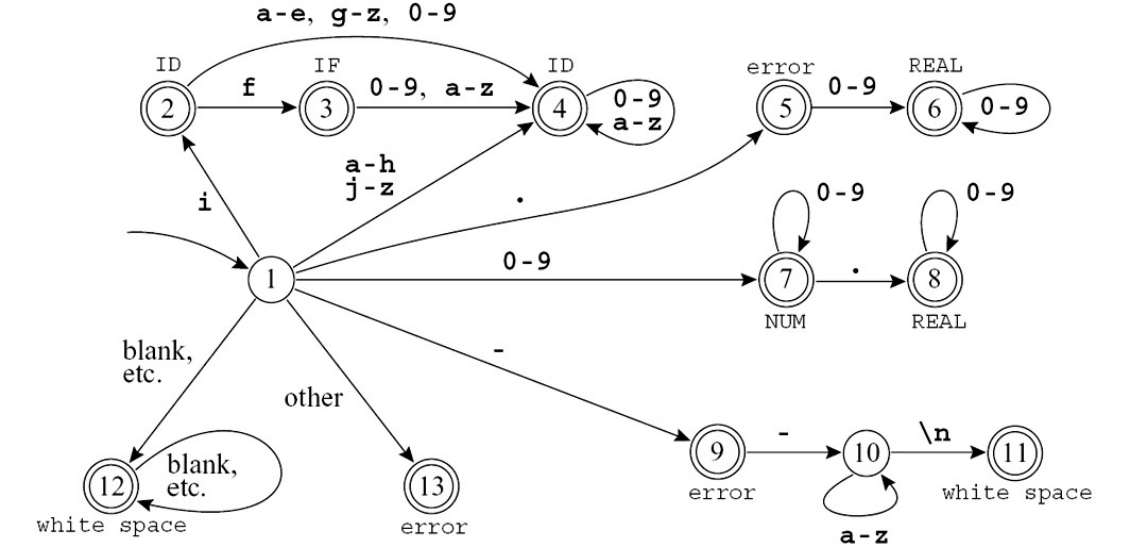
- 冲突时:
- 采用最长匹配
- 再按规则优先级
例如在遇到 if 时:
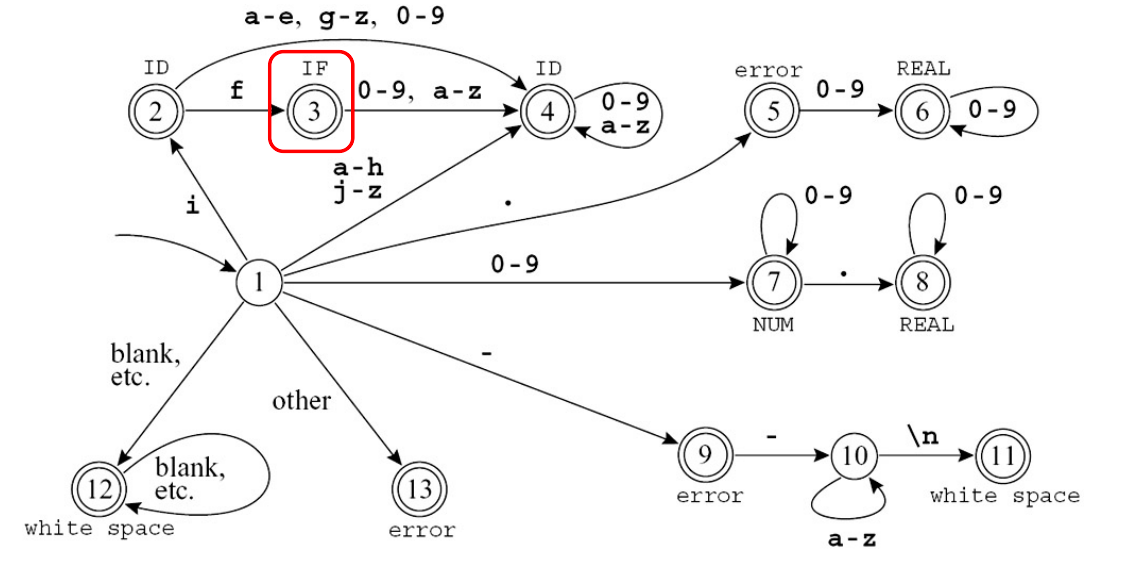
Transition matrix
可以对 DFA 进行编码:
int edges[state][character];
int final[state]; final[state] 将 state numbers 映射至 actions,而 edges[state][character] 表示 DFA 的转移,如下:
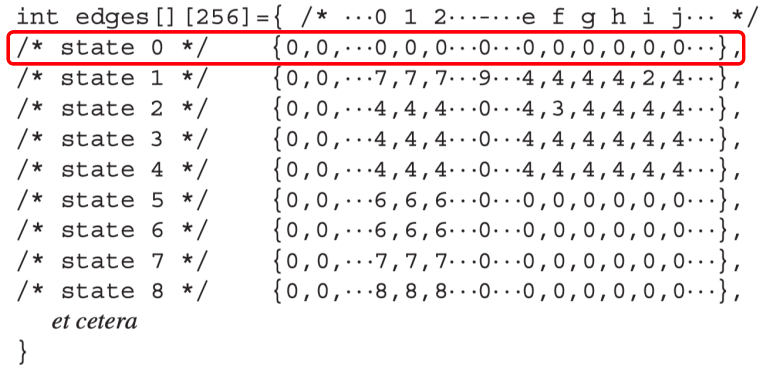
Recognizing the longest match
- 使用两个变量:
- LastFinal
- InputPositionAtLastFinal
- 当进入死状态时:
- 回退到 last final
- 输出 token
使用以下标志符:
- |:input position
- ⊥: automaton position
- T: Input position at last final
展示一个示例:
if --not-a-com 过程如下:
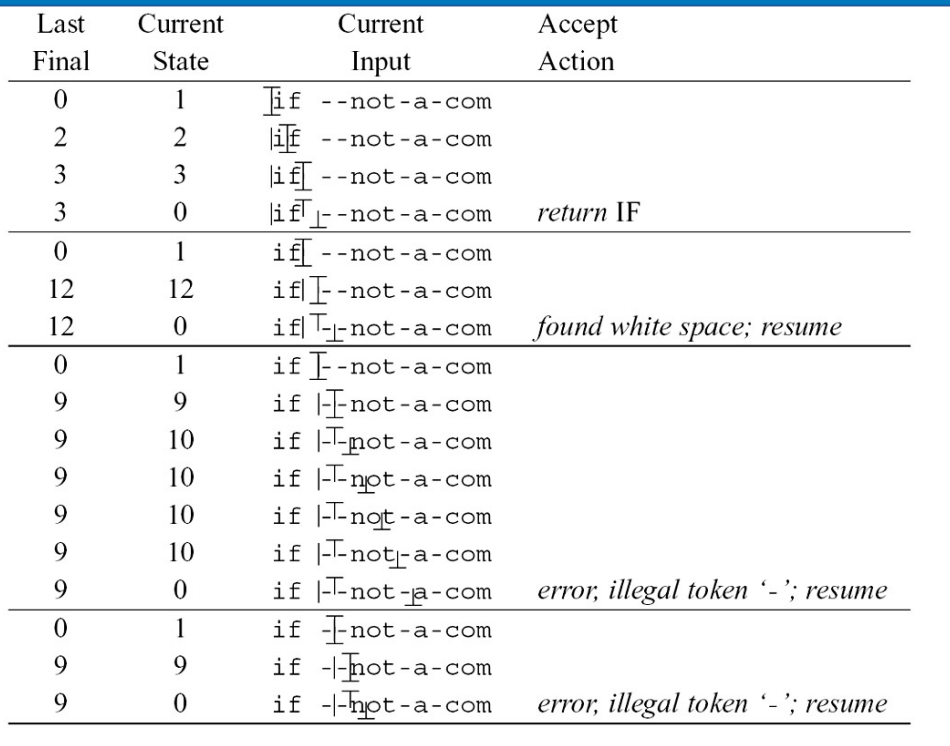
NFA
DFA 的构造有些困难,可以考虑使用 NFA:
NFA 定义
- 同一字符可能有多条边
- 可以有 ε 边(不消耗输入)
- 接受规则:只要有一条路径能到终态就接受
From RE to Lexer
词法分析器的完整构造流程:
步骤说明:
| 阶段 | 作用 |
|---|---|
| RE | 描述 token 的模式 |
| NFA | 使用 Thompson 构造 |
| DFA | 使用 subset construction |
| Lexer | 表驱动实现 |
Regular Expression → NFA
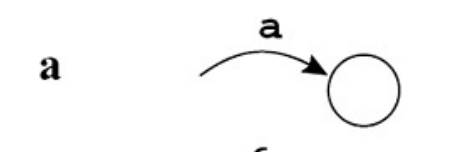
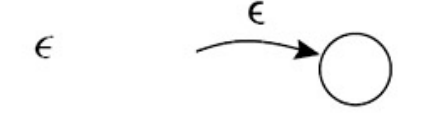
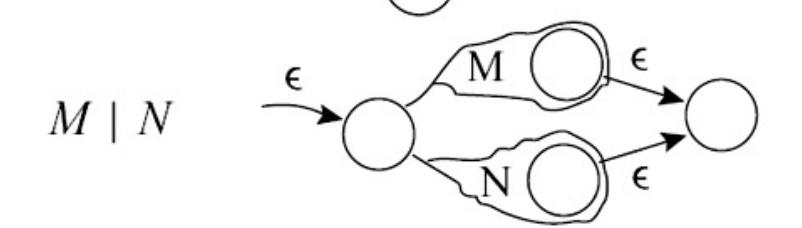
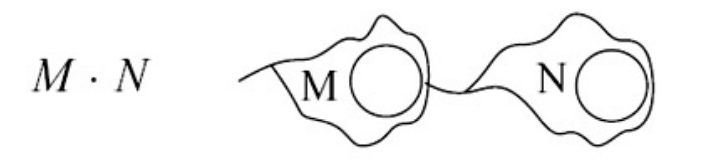
使用 Thompson Construction 将正则表达式转换为 NFA。
特点:
- 每个 RE 结构都有一个固定的 NFA 模板
- 所有 NFA 只有一个入口和一个出口
基本构造
- 单字符
- ε
运算构造
- Union(M | N)
- Concatenation(MN)
- Kleene Star(M*)
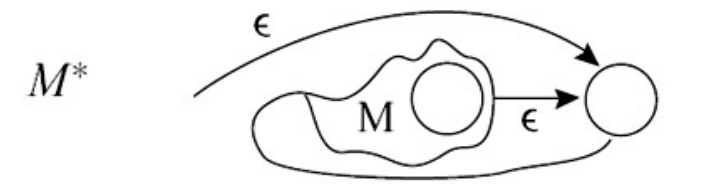
NFA Simulation
直接运行 NFA 的基本思想:同时追踪多个可能状态。
假设:
start state = s1
input = c1, c2, ... ck 算法:
d ← closure({s1})
for i = 1 to k
d ← DFAedge(d, ci) 其中:
d = 当前可能状态集合ε-closure
closure(S) 定义:
- 从集合 S 中所有状态出发,通过 ε-transitions 能到达的所有状态
例:
1 --ε--> 2
1 --ε--> 3 则:
closure({1}) = {1,2,3}move(S, c)
move(S, c) 表示:从 S 中的状态,通过字符 c 能到达的所有状态
例如:
2 --a--> 4
3 --a--> 5
move({2,3}, a) = {4,5}DFAedge(S, c)
定义:
DFAedge(S, c) = closure(move(S, c)) 步骤:
- 计算 move
- 再计算 ε-closure
NFA Simulation Example
NFA:
1 --ε--> 2
1 --ε--> 3
2 --a--> 2
2 --b--> 4
3 --a--> 4
4 --b--> 5
输入:
aab
- Step1:
d0 = closure({1})、closure({1}) = {1,2,3} - Step2:
move({1,2,3}, a)、2 → 2, 3 → 4、d1 = {2,4} - Step3:
move({2,4}, a)、2 → 2、d2 = {2} - Step4:
move({2}, b)、2 → 4、d3 = {4} - 判断:final state 为 5,但最终状态为
{4},所以字符串不能被接受。
Problem of NFA Simulation
通过上面的例子可以发现:
Manipulating sets of states is expensive
也就是读取一个字符都需要经历
move、closure、set union这三个步骤。
Solution: Subset Construction
其中一种解决方法是:预先计算所有状态集合。即:
这样扫描输入时,有:
state = transition[state][char]Subset Construction Algorithm
核心思想为:DFA 的每个状态 = 一个 NFA 状态集合
- Step1:初始状态时,
D1 = closure({start}) - Step2:对于每个状态集合 Di,对于每个输入符号 a ∈ Σ,计算
Dj = DFAedge(Di, a),若 Dj 为新集合,则加入 DFA 状态集合。 - Step3:重复:直到没有新集合产生
Example: NFA → DFA
NFA:
1 --ε--> 2
1 --ε--> 3
2 --a--> 2
2 --b--> 4
3 --b--> 3
3 --a--> 4- alphabet:
- 初始状态:,记为:D1
则 DFA 转移如下:
| State | a | b |
|---|---|---|
| ∅ | ∅ | |
- DFA Final States 只要集合包含:NFA final state,则为 DFA final state。例如:
{2,4}、{3,4}、{4}
DFA Minimization
DFA 最小化是将 DFA 化为最小形式(Minimized DFA)的过程,使得状态数最少且语言不变。
等价状态
-
两个状态 p 和 q 等价,当且仅当:
- 对于所有输入字符串 w,从 p 出发和从 q 出发,得到的输出结果相同
- 即: 和 要么都是接受状态,要么都是非接受状态
-
两个状态 p 和 q 可区分,如果存在某个字符串 w 使得 是接受状态而 不是接受状态(反之亦然)
划分算法(Partitioning Algorithm)
- 步骤:
- 初始划分:将状态分为接受状态组和非接受状态组
- 迭代细分:对每个组进行细分:
- 如果组内两个状态对某个输入字符转移到不同组,则将它们分开
- 重复直到收敛:重复步骤 2 直到没有组可以再细分
- 合并:每个组压缩为一个状态
示例:DFA Minimization 详细过程
给定以下 DFA(识别以 ab 结尾的字符串):
初始状态:0
接受状态:3

转移表:
状态  'a'  'b'
 0     1    2
 1     1    3
 2     1    2
 3     1    2
Step 1: 初始划分
- 接受状态:
- 非接受状态:
划分
Step 1 迭代 1:检查组
- 对状态 0:
- 组
- 组
- 对状态 1:
- 组
- 组 ← 转移到不同组!
- 对状态 2:
- 组
- 组
结论:状态 1 和 可区分,需要拆分!
划分
Step 1 迭代 2:检查组
- 对状态 0:
- 组
- 组
- 对状态 2:
- 组
- 组
结论:状态 0 和 2 行为完全相同,不需要拆分!
划分
Step 2: 构建最小化 DFA
- 组 → 新状态 A
- 组 → 新状态 B
- 组 → 新状态 C(接受状态)
转移计算:
-
从 A(代表 )出发:
- 读 'a':,所以
- 读 'b':,所以
-
从 B 出发:
- 读 'a':,所以
- 读 'b':,所以
-
从 C 出发:
- 读 'a':,所以
- 读 'b':,所以
最小化结果
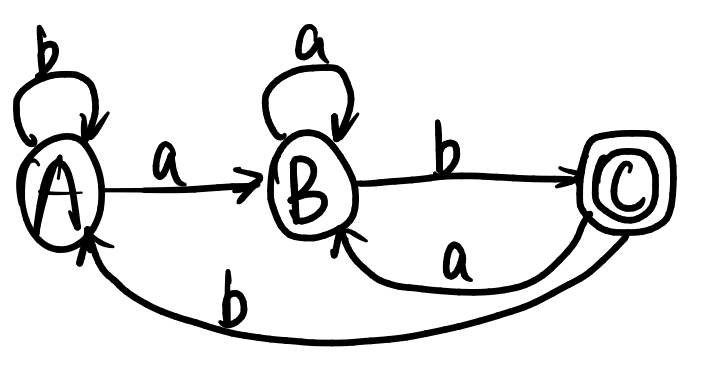
| 最小化前状态数 | 最小化后状态数 |
|---|---|
| 4 | 3 |
Different tokens 类型的情况
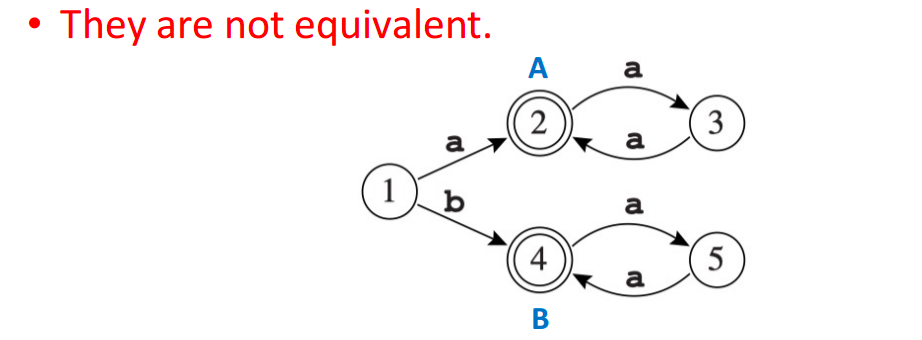
- state2 与 state4 是等价的,但是 A 和 B 是两种 token 类型,此时不应该放在一个等价类里面。
- 考虑将他们分到不同的等价组里面,即可
Lex: A Lexical Analyzer Generator
Lex 是一个 词法分析器生成器(lexer generator),用于根据 token 的正则表达式描述自动生成 lexer 程序。
它是 Unix 系统中经典的编译器工具,通常与 **Yacc / Bison(语法分析器生成器)**一起使用。
Motivation
手写词法分析器虽然可行,但存在以下问题:
- 实现复杂
- 代码容易出错
- 维护困难
- token 规则修改成本高
因此,可以使用 lexer generator 自动生成词法分析器。
Lex 工作流程
Lex 的基本流程如下:
也可以表示为:
Lex Specification File
Lex 使用一个 .l 文件作为输入。
其结构分为 三部分:
definitions
%%
rules
%%
user code- Definitions:用于定义:
- 宏(macros)
- 头文件
- 全局变量
- token 名称
例如:
%{
#include <stdio.h>
%}

DIGIT   [0-9]
ID      [a-zA-Z][a-zA-Z0-9]*
解释:
| 定义 | 含义 |
|---|---|
%{ %} | 插入 C 代码 |
| DIGIT | 宏定义 |
| ID | identifier 的 RE |
- Rules:规则部分格式:
pattern action
pattern 是 正则表达式 action 是 C 代码
例如:
%%
"if"        return IF;
"while"     return WHILE;
{ID}        return ID;
{DIGIT}+    return NUM;
[ \t\n]+    ;
%%
解释:
| 规则 | 含义 |
|---|---|
"if" | 关键字 if |
{ID} | 标识符 |
{DIGIT}+ | 数字 |
[ \t\n]+ | 忽略空白 |
- User Code
用户自定义代码部分,例如:
int main() {
    yylex();
    return 0;
}
其中:
yylex()
是 Lex 自动生成的词法分析函数。
Example: Simple Lex Program
%{
#include <stdio.h>
%}

DIGIT   [0-9]

%%
{DIGIT}+   printf("NUMBER\n");
"+"        printf("PLUS\n");
"-"        printf("MINUS\n");
[ \t\n]    ;
%%

int main() {
    yylex();
}
输入:
12+3
输出:
NUMBER
PLUS
NUMBER
Lex 内部实现原理
Lex 内部实际上使用:
Regular Expressions
      ↓
     NFA
      ↓
     DFA
      ↓
Table-driven Scanner
这和前面讲的 RE → NFA → DFA → Lexer 完全一致。
Longest Match Rule
Lex 默认使用 Longest Match 匹配 最长可能字符串
例如:
==
=
输入:
==
Lex 会选择:
==
而不是两个 =。
Rule Priority
如果多个规则匹配 相同长度字符串,使用 先写的规则
例如:
if      return IF;
[a-z]+  return ID;
输入:
if
结果:
IF
而不是 ID。
Reserved Words Handling
关键字通常写在 identifier 规则之前:
if      return IF;
else    return ELSE;
[a-z]+  return ID;
原因:
- 同长度匹配
- 使用 rule priority
Ignoring Tokens
有些 token 不需要返回,例如:
- whitespace
- comments
例如:
[ \t\n]+ ;表示:
匹配但不执行任何动作
Interaction with Parser
Lex 通常和 Yacc/Bison 一起使用。
流程:
Source Program
      ↓
    Lexer
      ↓
    Tokens
      ↓
    Parser
      ↓
  Syntax Tree
- Lex 负责 词法分析
- Yacc 负责 语法分析

Written by
ZZC
每天研究怎么摸鱼的神人
Comments
评论功能即将上线